


Try Traditional Clothing From Around the World in Your Own Photos: 11 Outfits (2026)
Key takeaways
- You can try traditional clothing from around the world in photos without buying a single garment. An AI outfit tool can place a lehenga, kimono or hanfu on your own picture while keeping your face recognizable.
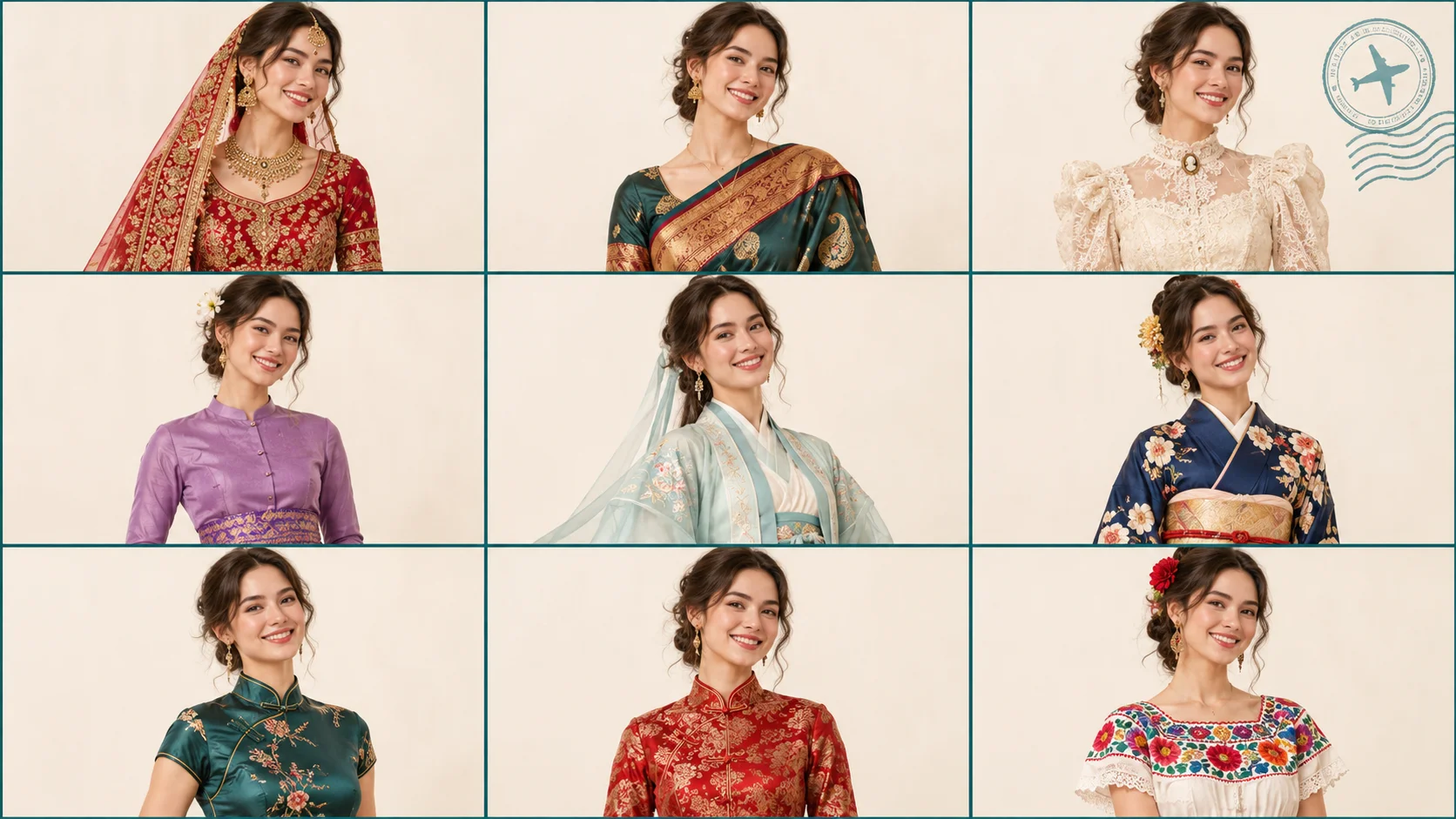
- This guide covers 11 outfits: Indian bridal, sari, lehenga, Victorian gown, longyi, hanfu, kimono, qipao, tangsuit, abaya and Mexican bordado. Each card tells you what defines the look and which kind of photo suits it.
- Photo choice matters more than prompt cleverness. Garments with big silhouettes (sari, lehenga, Victorian gown, longyi) need a full-length shot. Collar-led garments (qipao, tangsuit, bordado blouses) work from a close-up.
- The East Asian four are the easiest to mix up. Hanfu, kimono, qipao and tangsuit differ in silhouette, collar and closure, and our comparison table shows how.
- Name the garment and its details, check collars, patterns and jewelry at full size, and credit the tradition in your caption. That is both better results and better manners.
Most of us own a closet’s worth of clothes and a camera roll full of photos, and the two have never met anything outside our own culture. That is changing. With an AI outfit tool you can stand in your kitchen and “wear” a red-and-gold bridal lehenga, a Kyoto-style kimono or a hand-embroidered blouse from Oaxaca, then post the result as a little around-the-world photo series.
It is also a surprisingly good way to learn. To prompt a garment well you have to know what makes it that garment: which way the collar closes, whether the skirt is stitched or wrapped, what the embroidery is supposed to show. By the end of one afternoon you tend to know more about these traditions than when you started.
How to try on traditional outfits in your photos
The process is the same for every outfit in this guide:
- Pick a clear source photo. Face unobstructed, even daylight, no heavy filter. Avoid sunglasses, big hats and bulky scarves, because the tool has to replace what you’re wearing.
- Open Virtual Outfit in Movcl and choose or describe the garment. Use the proper name (“kimono”, not “Japanese dress”) and add two or three details from the cards below.
- Frame for the garment. Waist-up for collar-led pieces, full-length for draped or voluminous ones. If the outfit doesn’t fit your photo’s framing, pick a different photo rather than fighting it.
- Polish the result. Use One-Click HD to sharpen embroidery, brocade and jewelry, then compare your face with the original.
- Make it move, if you like. Turn your favorite look into a short clip with a video effect such as Memories, Spotlight or Dream Places, which suits a travel-style series.
The 11 outfits, region by region
Think of these as passport stamps: each card shows where the garment comes from, the details worth naming in your prompt, and the photo that suits it best.
1. Indian bridal
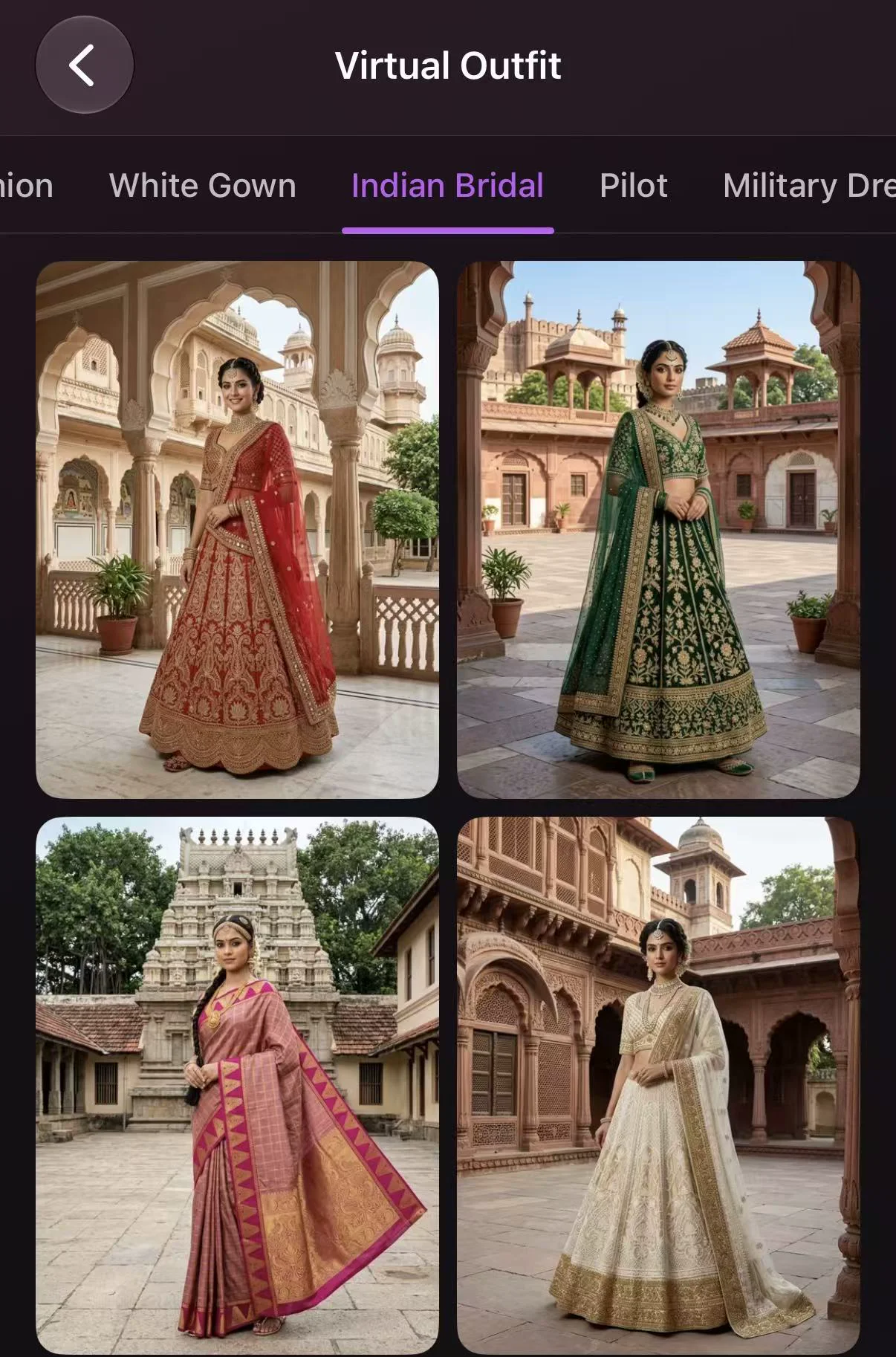
- The look: Most often a red or maroon lehenga or sari in heavy silk, finished with gold zari or zardozi embroidery. Many brides also wear a dupatta over the head, a maang tikka on the forehead, layered necklaces, bangles and mehndi on the hands. Regional looks vary widely; South Indian brides often choose a Kanjivaram silk sari with a wide gold border.
- Best photo: A front-facing portrait with neck, ears and hands visible. Jewelry needs room to appear.
- Prompt details: deep red and gold, zardozi embroidery, dupatta over the head, maang tikka, layered gold necklace, bangles.
2. Sari
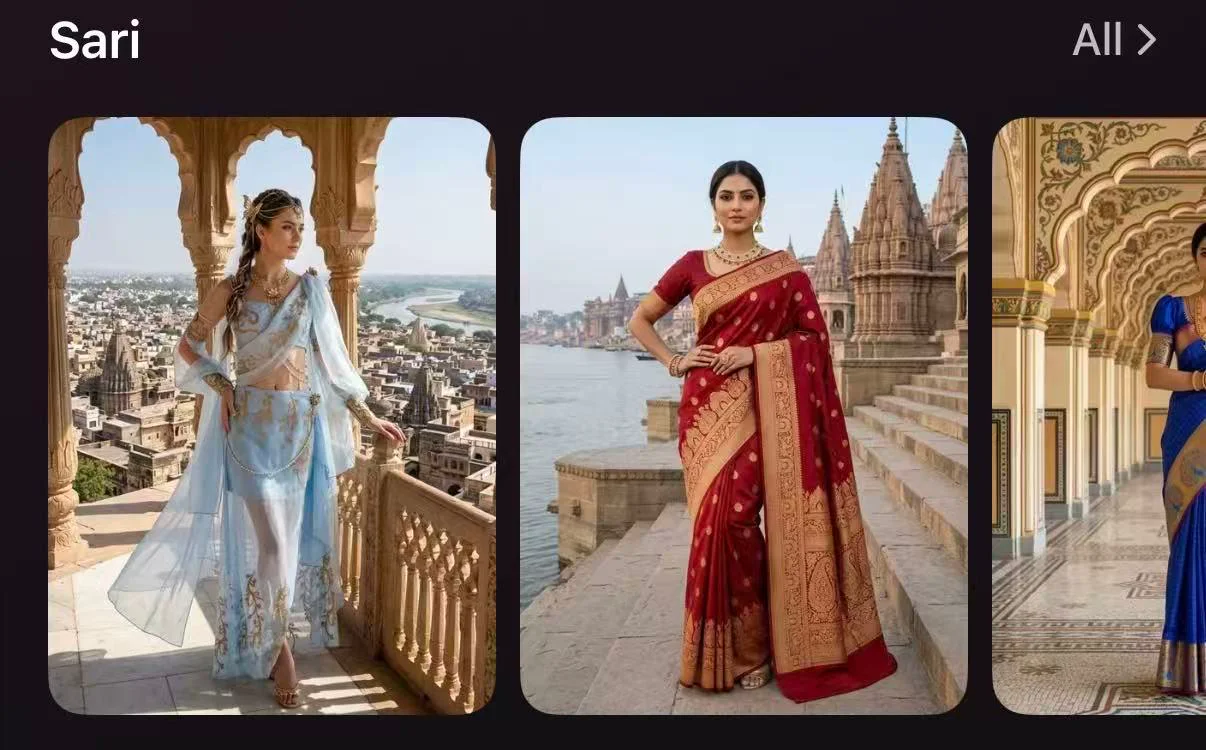
- The look: A single unstitched length of fabric, typically five to nine yards, draped over a fitted blouse and petticoat. In the common Nivi drape, pleats gather at the waist and the decorated end, the pallu, falls over one shoulder. Fabrics range from cotton to chiffon to Banarasi silk.
- Best photo: Three-quarter or full-length, standing, with one shoulder turned so the pallu shows.
- Prompt details: Nivi drape, pleats at the waist, pallu over the left shoulder, silk with a contrasting border. Pleats are where AI most often slips, so inspect them.
3. Lehenga
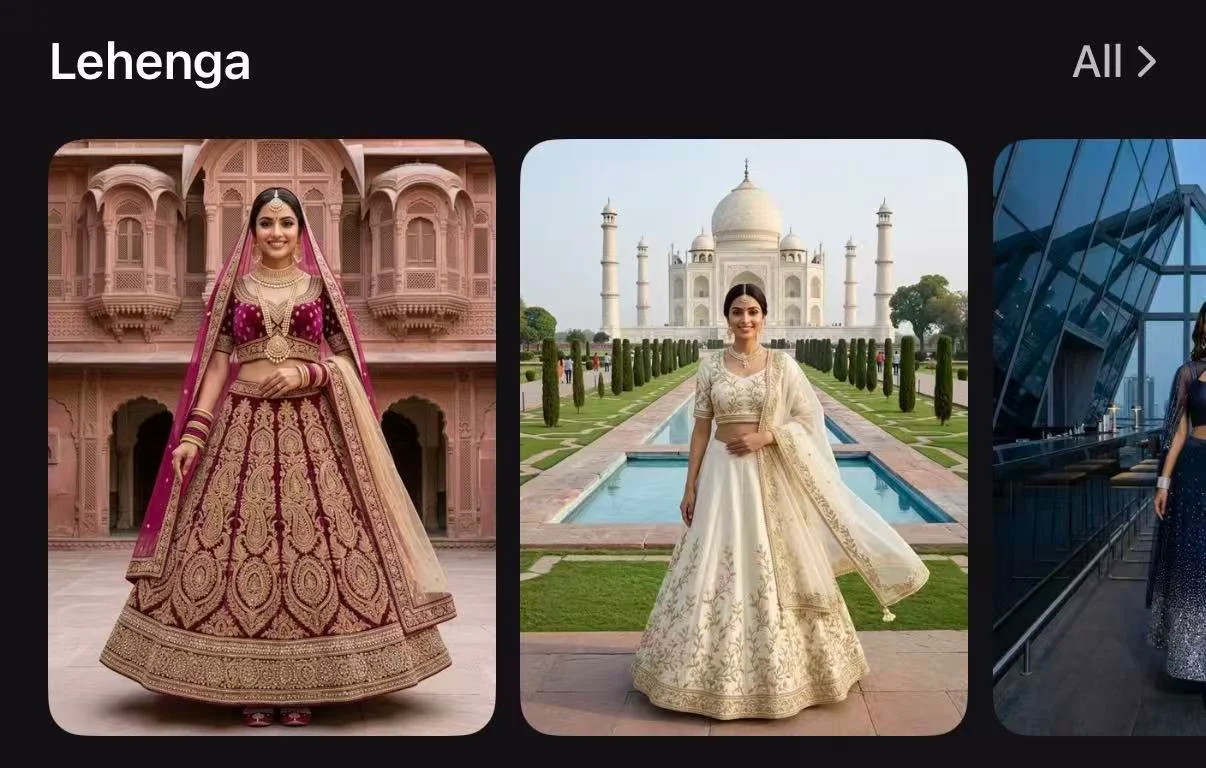
- The look: A three-piece set of a long flared skirt, a fitted choli and a dupatta. Where bridal lehengas lean red and heavily worked, festive ones can be mint, marigold or royal blue, with mirror work or lighter embroidery.
- Best photo: Full-length, with space on both sides for the skirt. A twirl shot is ideal if you have one.
- Prompt details: flared lehenga skirt, embroidered choli, dupatta draped over one arm, mirror work.
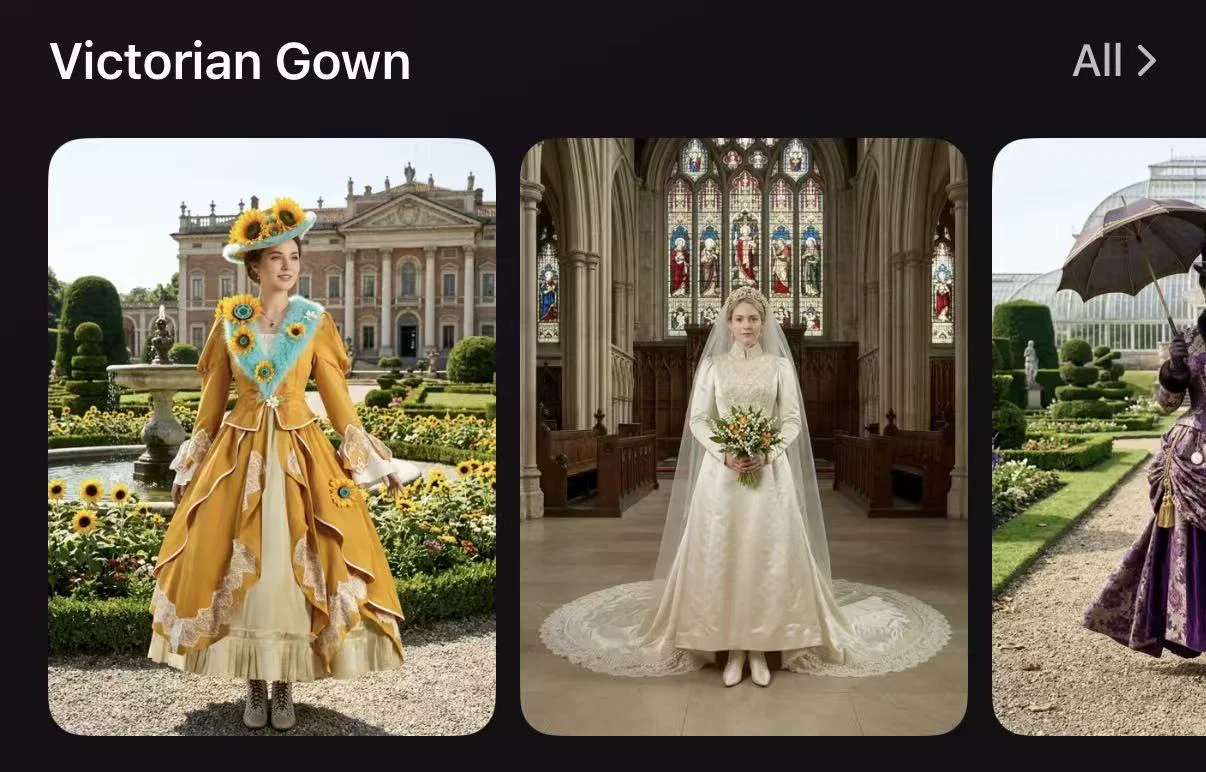
4. Victorian gown
- The look: A corset-shaped bodice, a full skirt, and plenty of lace, ruffles and buttons. Day dresses had high necklines and long sleeves; evening gowns showed the shoulders. The skirt shape changed over the decades, from wide crinolines to a rear bustle. Cameo brooches, gloves and parasols finish it.
- Best photo: A seated or standing three-quarter portrait with soft window light. Sepia or a muted vintage tone makes the era feel convincing.
- Prompt details: high lace collar, fitted bodice, cameo brooch, long sleeves, parlor background, soft sepia tone.
5. Longyi
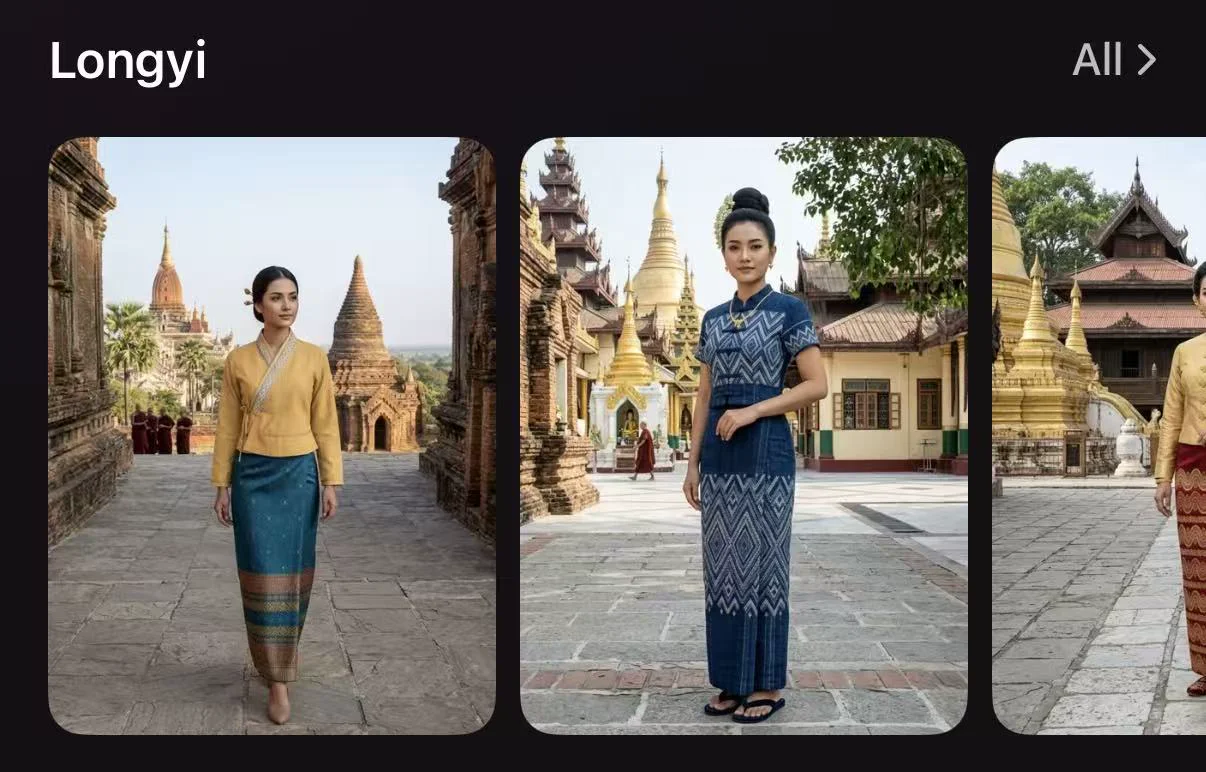
- The look: A tube-shaped length of cloth wrapped at the waist and worn by both men and women. Women pair it with a fitted eingyi blouse; men tie it at the front and wear a shirt or jacket. Patterns include checks, stripes and wavy acheik weaves. It is Myanmar’s everyday national dress and is also worn by Shan and Burmese communities in northern Thailand.
- Best photo: Full-length, standing straight, so the wrap and its pattern read clearly.
- Prompt details: woven longyi in a checked pattern, fitted eingyi blouse, standing pose. Want a distinctly Thai look instead? Try chut thai, a wrapped silk skirt with a sabai shawl.
6. Hanfu
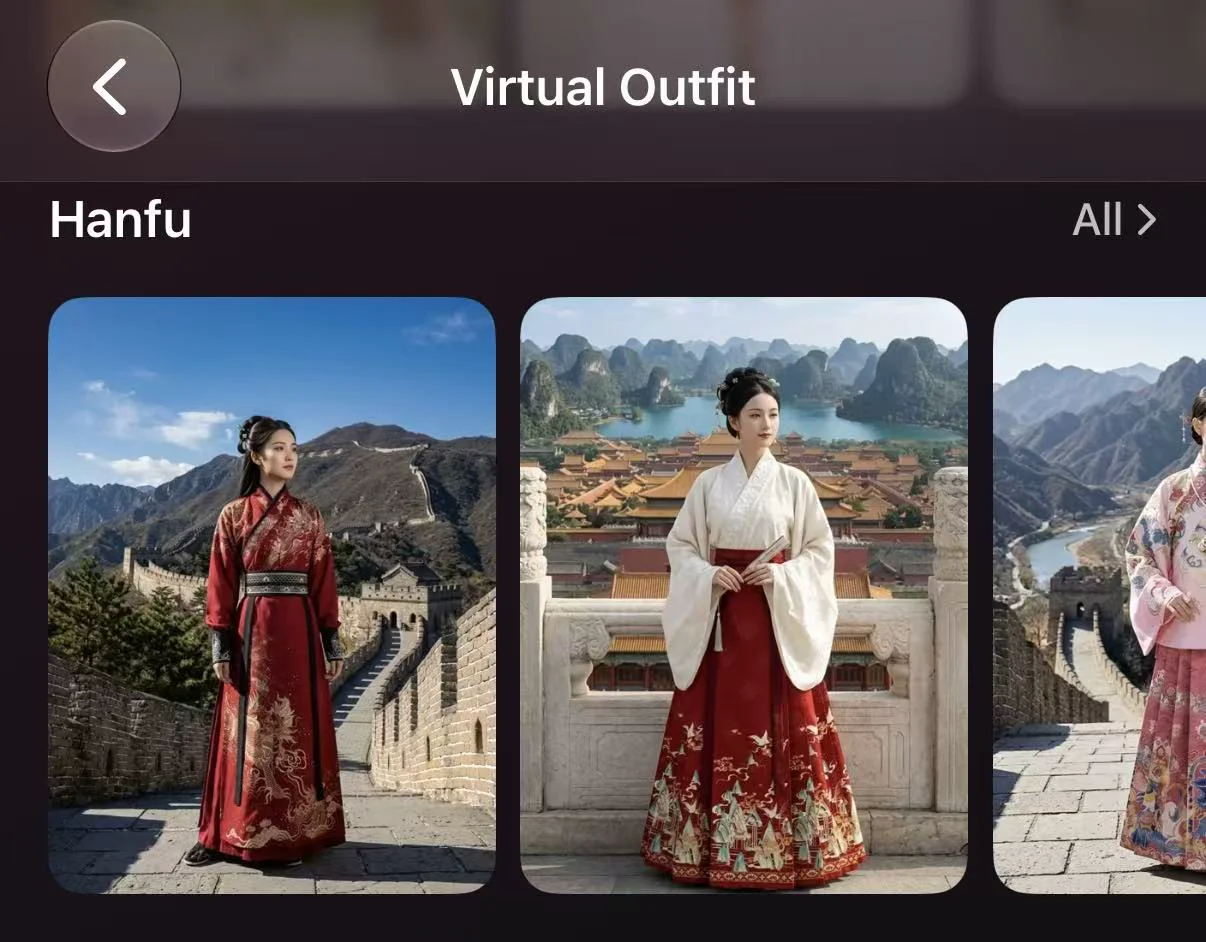
- The look: Layered robes with wide sleeves, a crossed collar and a sash at the waist. Styles shift by dynasty: Tang-era looks feature a high-waisted skirt, Song looks are slimmer and softer, and Ming looks have structured jackets and pleated skirts.
- Best photo: Waist-up or three-quarter, arms slightly away from the body so the sleeves can show.
- Prompt details: hanfu, crossed collar, wide flowing sleeves, high-waisted pleated skirt, pale silk gauze, garden or pavilion background.
7. Kimono
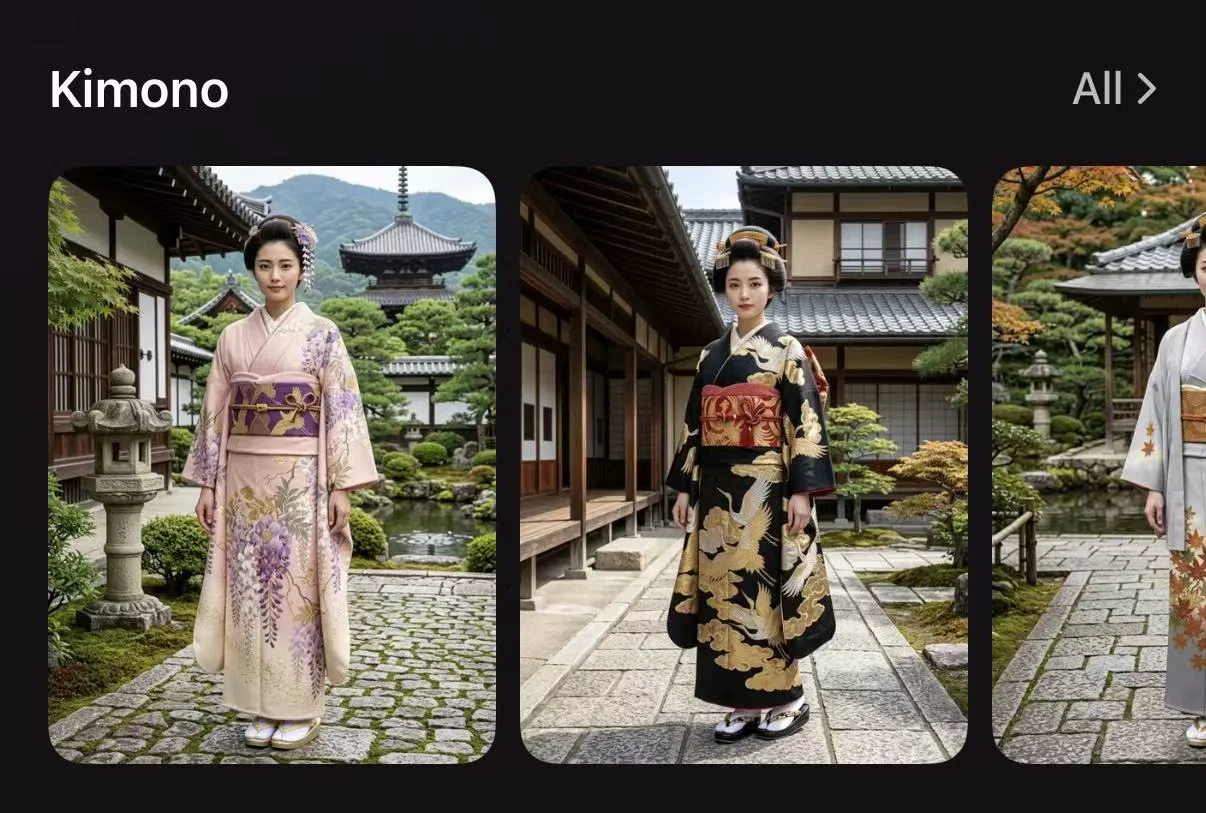
- The look: A straight-cut, T-shaped robe closed with a wide obi sash. The left front panel crosses over the right for the living, and the reverse is traditionally reserved for burial. Formal styles include the long-sleeved furisode, while the yukata is the lighter cotton summer version.
- Best photo: A standing three-quarter turn, so the obi and the sleeve length both show.
- Prompt details: furisode kimono, left panel over right, wide obi with a bow, seasonal floral pattern. Always check the collar direction.
8. Qipao
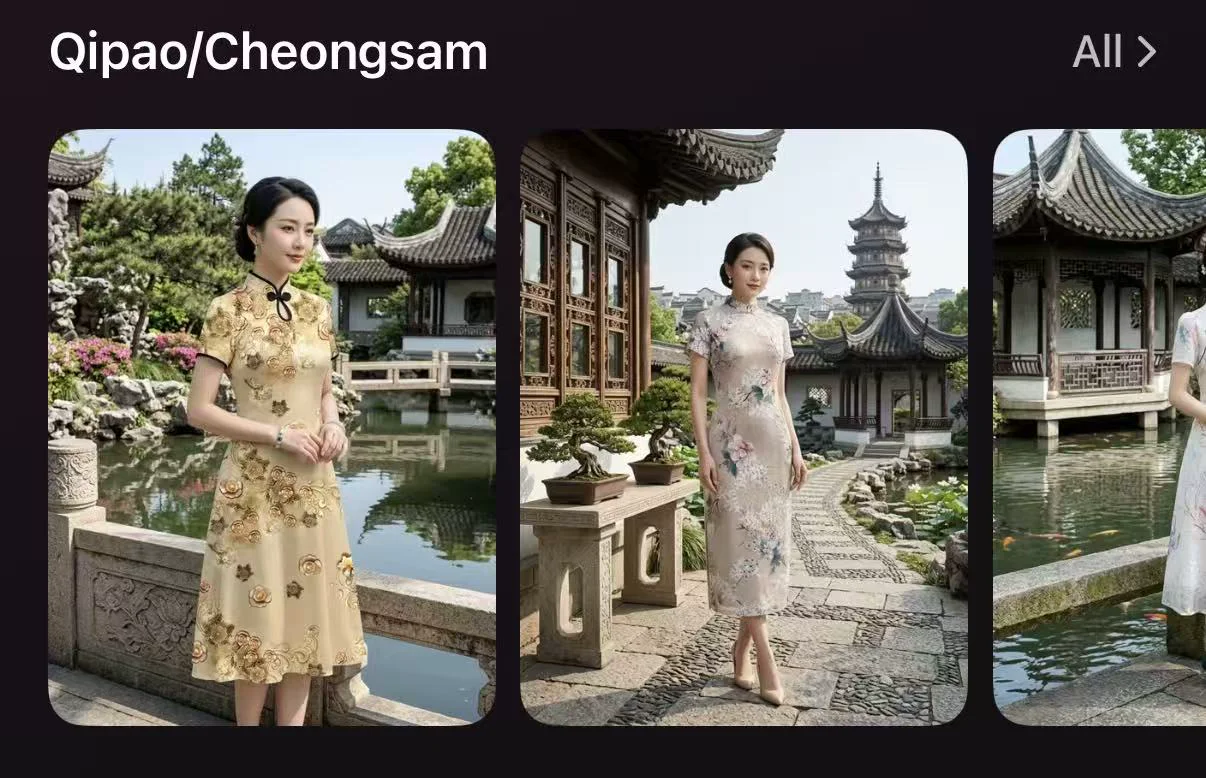
- The look: A fitted, one-piece dress with a high mandarin collar, a diagonal closure and knotted frog buttons, usually with side slits. It developed from Manchu women’s robes into the slim silhouette that became famous in 1920s and 1930s Shanghai. In Cantonese it is called the cheongsam.
- Best photo: Waist-up or three-quarter, with a straight, relaxed posture.
- Prompt details: silk brocade qipao, mandarin collar, knotted frog buttons, side slit, 1930s Shanghai mood.
9. Tangsuit
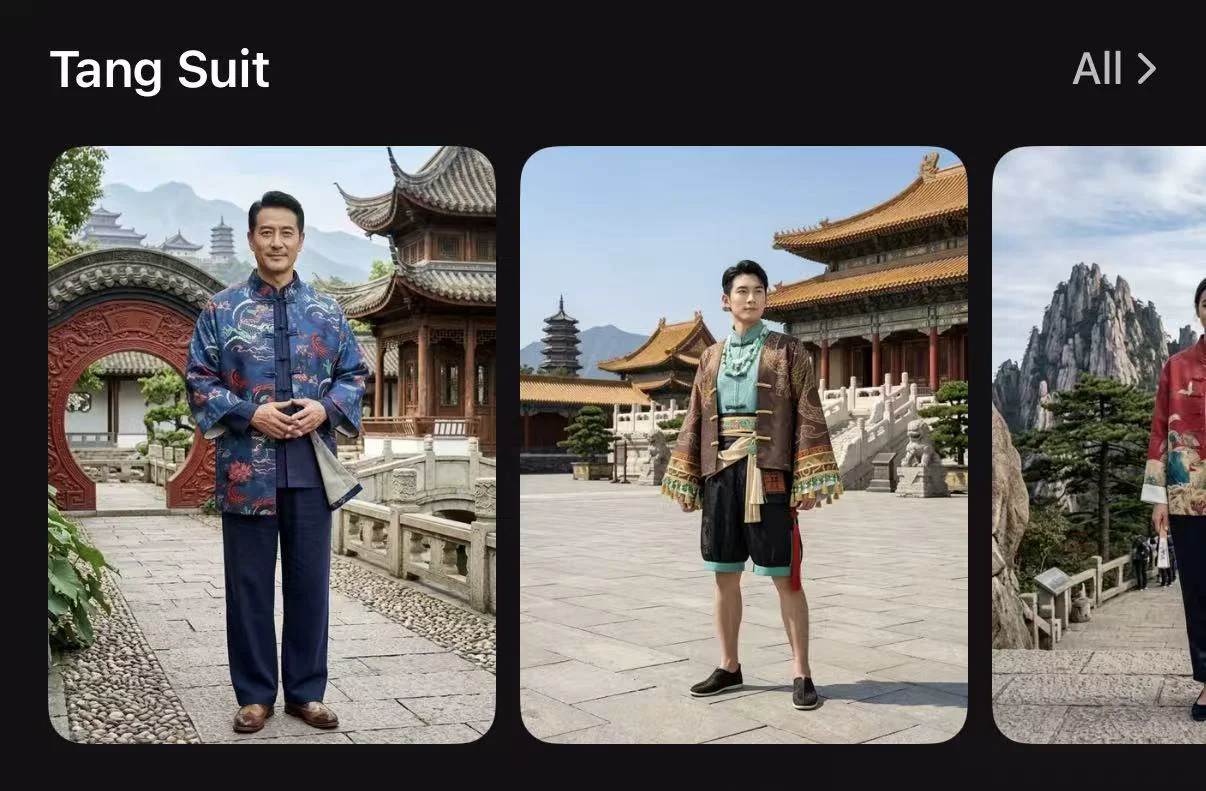
- The look: A jacket with a mandarin collar, straight front opening and frog buttons, usually in brocade or satin with auspicious patterns such as peonies or longevity motifs. Despite the name, it doesn’t date from the Tang dynasty. It grew out of the Qing-era magua jacket, and “Tang” here refers to Chinese people, as in “Tang people”.
- Best photo: A centered upper-body shot, which makes it a good pick for family or couple photos at New Year.
- Prompt details: red brocade tangsuit jacket, mandarin collar, frog buttons, peony pattern, festive lanterns behind.
10. Abaya
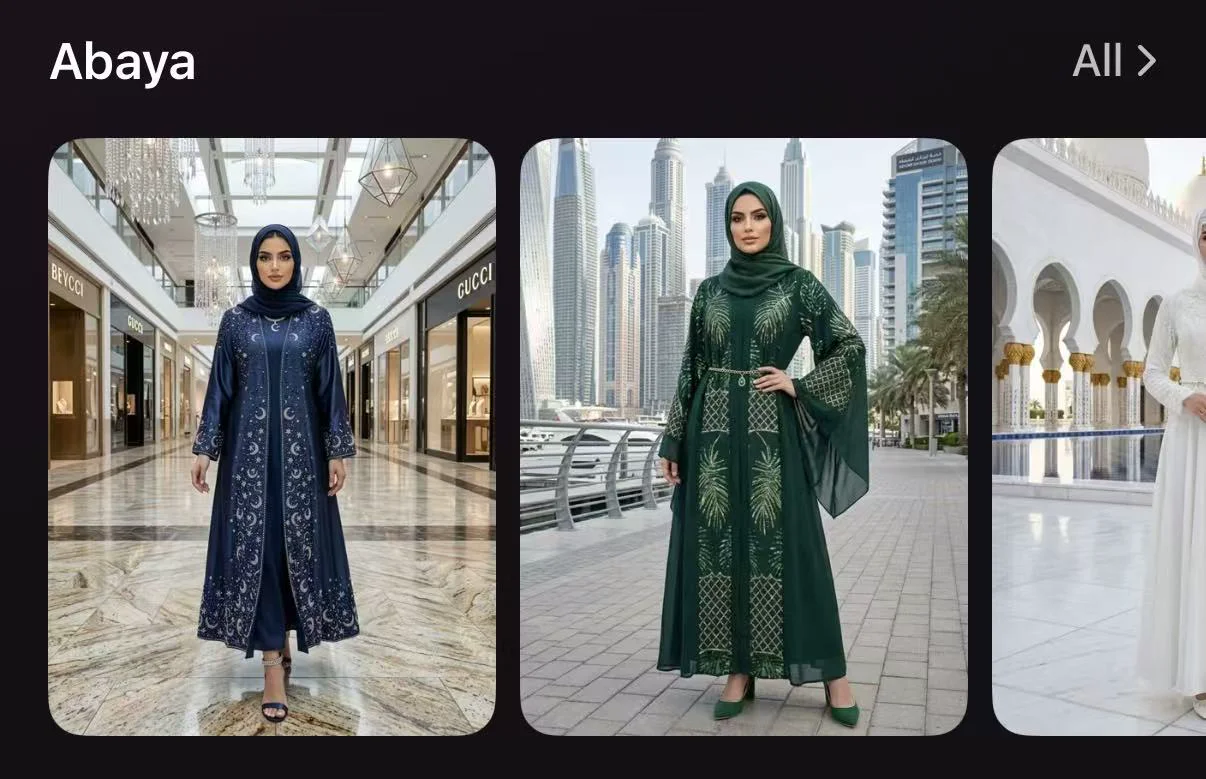
- The look: A loose, floor-length outer garment worn by many women across the Gulf and the wider Arab world. Classic black remains common, while modern versions add color, open fronts and embroidered cuffs. Some wearers pair it with a shayla or hijab, so say so in your prompt if you want it.
- Best photo: Standing three-quarter or full-length with a little movement, because the fabric’s flow is the whole point.
- Prompt details: flowing abaya, subtle tonal embroidery on the cuffs, soft draping, modest and elegant styling.
11. Mexican bordado
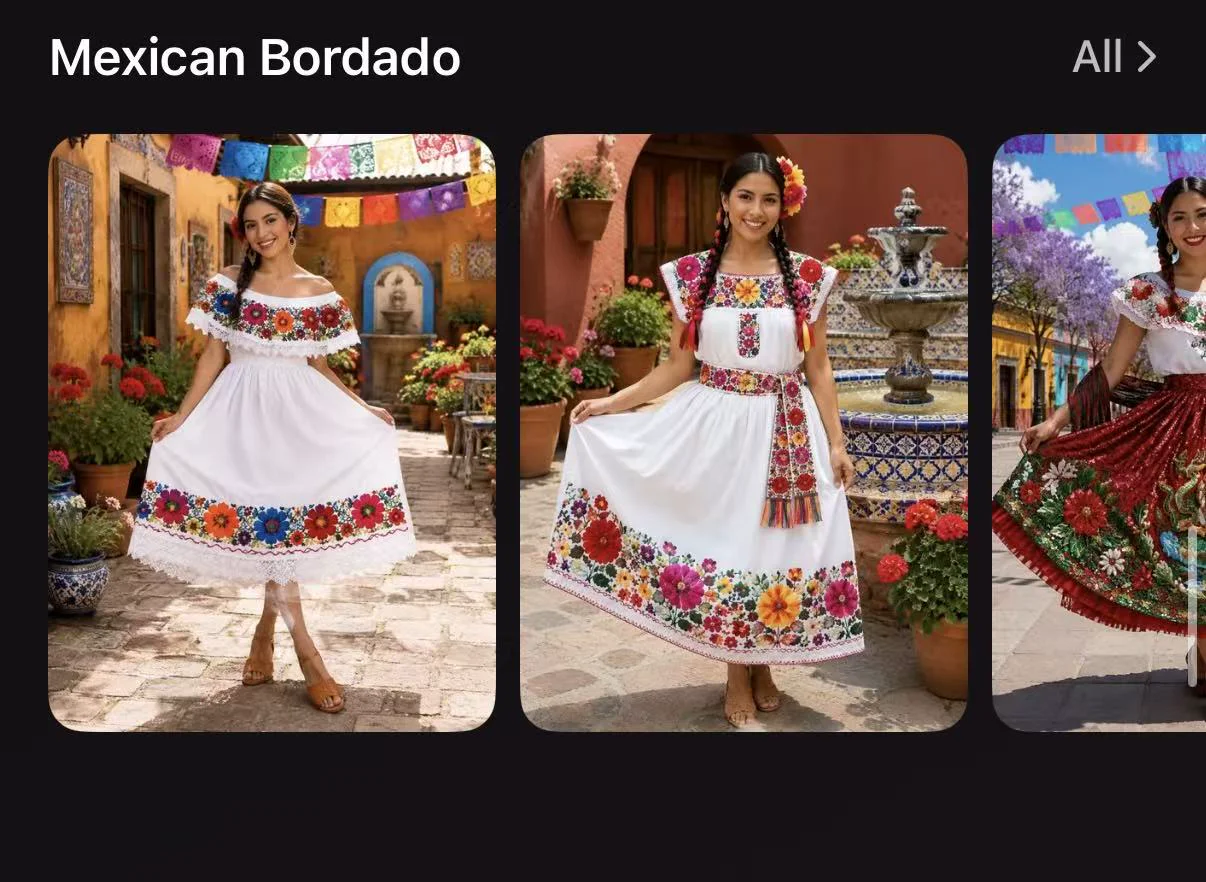
- The look: Bordado means embroidery, and the tradition varies by region. In Oaxaca you’ll see large floral embroidery on dark satin or cotton; in Chiapas, bold flowers on dark fabric; in Yucatán, the white hipil dress with cross-stitched flowers at the neckline and hem.
- Best photo: Bright, front-facing and cropped at the chest or waist, so the neckline embroidery gets center stage.
- Prompt details: hand-embroidered floral blouse, saturated thread colors, cross-stitch neckline. Name the region you want for the most accurate result.
Eleven outfits is just the start. The world’s wardrobe is much bigger.
Beyond everything above, there are many more national and regional costumes waiting for you in Movcl. Pick a new corner of the map, upload one photo, and see yourself in it. Where will your next stop be?
Start Your World TourWhich outfit suits which photo?
| Your photo | Try these first | Why |
|---|---|---|
| Close-up selfie | Indian bridal, qipao, tangsuit, bordado, Victorian gown | Collars, jewelry and neckline embroidery do the work. |
| Waist-up portrait | Hanfu, kimono, abaya, tangsuit | Sleeves, collars and layers are visible without needing the skirt. |
| Full-length standing | Sari, lehenga, longyi, Victorian gown | Drapes, wraps and volume need the whole silhouette. |
Hanfu, kimono, qipao or tangsuit? A quick mix-up guide
These four are the ones people confuse most, and AI tools can blend them if your prompt is vague. Use this table to be specific:
| Garment | Silhouette | Collar and closure | Typical fabric |
|---|---|---|---|
| Hanfu | Layered robes, wide sleeves | Crossed collar, tied with a sash | Silk, gauze |
| Kimono | Straight T-shape, wide obi | Crossed collar, left over right | Silk, cotton (yukata) |
| Qipao | Fitted, side slits | High collar, diagonal closure, frog buttons | Brocade, silk |
| Tangsuit | Straight jacket | High collar, center-front frog buttons | Brocade, satin |
A note on doing this respectfully
- Use the real name. “Hanfu”, “longyi” and “abaya” are the words their communities use. Saying them in your caption does more than any hashtag.
- Treat ceremonial pieces with care. Bridal wear, festival dress and religious garments carry meaning. A thoughtful portrait is fine; a joke or a costume gag isn’t.
- Credit the tradition. A line like “trying a Yucatán-style hipil, the cross-stitch work is incredible” turns a post into appreciation.
- Learn from the people who wear it. If a friend or follower from that culture points out something off, take the note and fix it.
Where AI outfits still fall short
Complex construction is the main weak spot. Sari pleats, obi bows, layered hanfu sleeves and heavy jewelry can come out with an extra fold, a missing clasp or a collar that closes the wrong way. Text and symbols woven into brocade can also turn into near-miss shapes. None of this ruins a fun photo series, but treat the result as an illustration inspired by the garment, not a documentary record of it.
And if you plan to wear the real thing to a wedding or festival, use your AI test as a preview, then ask someone from that tradition how it is actually worn.
Frequently asked questions
- Can I try on traditional clothing from around the world in a photo?
- Yes. An AI outfit tool can place a traditional garment on your own photo while keeping your face. Start with a clear, evenly lit picture, name the garment and its key details, and check the result at full size.
- Is it disrespectful to try on another culture’s clothing with AI?
- Not when you do it with care. Use the garment’s proper name, don’t turn it into a joke or a costume, be thoughtful with ceremonial pieces such as bridal wear, and credit the tradition in your caption.
- Which outfit is easiest to try first?
- Tangsuit, kimono and hanfu usually work well from a waist-up photo. Saris and lehengas need a full-length photo because of the draping and skirt volume.
Ready for your own around-the-world photo series?
Upload one photo, try on a different tradition each day, and turn your favorite look into a short AI video, right from your phone.
Try Movcl