Gemini 4 Pro "Leaked"? Here's What Google Has Actually Confirmed
Mystery Arena models, a reported leadership shuffle at DeepMind, and a "leaked benchmark" that turned out to be someone's prediction — we sorted the real signal from the noise.
Key Takeaways
- Gemini 4 is real and in progress — Google DeepMind confirmed pretraining had begun back in July, and as of September 23, DeepMind's own AI lead says it's now in early post-training and the team wants to ship "much earlier" than year-end.
- "Gemini 4 Pro" isn't an official name yet — Google has only ever said "Gemini 4." The "Pro" is the community filling in the blank based on past naming patterns.
- A mystery anonymous model (codename gemini-3.8-flash) has been spotted on Arena generating complex SVG art — plausible as an early Gemini 4 checkpoint, but Google hasn't confirmed the connection.
- Most of the specific numbers circulating online — a 10-million-token context window, permanent cross-session memory, robot control, specific benchmark scores beating rival models — trace back to single, unverified social media accounts. Treat them as fan fiction until Google says otherwise.
- One widely shared "leaked benchmark chart" was debunked outright — the Gemini 4 column in it was labeled "(PREDICTED)" in the original image.
- Some sites are already selling "Gemini 4 Pro API access" — the model isn't public yet, so treat any page charging for it as, at best, a placeholder that'll route you to a different model.
If you've searched "Gemini 4 Pro" in the last few days, you've probably hit a wall of contradictory claims — some from Google itself, most from accounts with no way to verify what they're posting. Here's what's actually confirmed, what's plausible-but-unverified, and what's just made up.
What Google Has Actually Said
✅ Confirmed
| Date | What happened |
|---|---|
| July 21, 2026 | Google DeepMind's official blog confirmed pretraining had begun on Gemini 4, calling it their "most ambitious" effort yet. |
| Late July 2026 | Sundar Pichai repeated the confirmation on Google's Q2 earnings call, describing Gemini 4 as built on a "significantly larger" base model, with a stated focus on coding and autonomous agent capability. |
| September 23, 2026 | DeepMind's Koray Kavukcuoglu, speaking at The Information's AI Agenda Live summit, said Gemini 4 has entered early post-training and that the team is aiming to ship "much earlier" than year-end, starting with an early post-trained version. |
Strip away the speculation and that's the entire confirmed record: Gemini 4 exists, it's in post-training, and Google wants it out before the end of 2026. No specs, no exact date, no official name beyond "Gemini 4."

What's Probably True, But Not Confirmed
🟡 Plausible, unverified
- The mystery Arena model. In September, an anonymous model tagged
gemini-3.8-flashshowed up on Arena (formerly LMSYS), producing notably complex SVG output — users shared examples like detailed PS5 and BMW M4 renders, with reasoning times of 8–10 minutes. The model itself is very likely real. Whether it's connected to Gemini 4 is community speculation Google hasn't confirmed. - A release window of October–December. Prediction markets had roughly 68% odds on a release by late October and 85% by late November as of this writing; outlets like TestingCatalog and 9to5Google, extrapolating from Google's past release cadence, lean toward November–December. Kavukcuoglu's September 23 comments make an October–November window somewhat more credible, but no specific date has been confirmed.
- A DeepMind leadership shift. Some reports describe Demis Hassabis moving into a DeepMind chairman / Alphabet chief scientist role, with Kavukcuoglu now leading Gemini directly — consistent with his September 23 appearance being described as his first public appearance in that capacity. We haven't been able to verify this directly through an official Google channel, so treat it as reported-but-not-Google-confirmed.
Rumors That Are Almost Certainly Made Up
🔴 Low credibility
- 10-million-token context window, 256K output, permanent cross-session memory, robot control. This entire spec sheet traces back to a single anonymous account on X, claiming to have "reverse-engineered the backend routing." There's no supporting evidence — this reads like fabrication, not a leak.
- "1.5M context, beats GPT-5.6 Sol and Claude Fable 5 across the board." Circulated in mid-August from another single-account post, with no benchmark file attached.
- "First checkpoint already shipped, full release in October, Flash-Lite and NB2 Lite in September." This one traces to a single tweet from one account. The September Flash-Lite claim, notably, still hadn't happened as of this article's publish date — a good sign the rest of the claim isn't reliable either.
- Internal benchmarks claiming it "surpasses Fable 5.1 at coding" and "beats GPT-6 Astra at reasoning." No verifiable source behind either claim.
The One That's Already Been Debunked
❌ False
A "leaked benchmark table" circulated widely starting September 4, showing Gemini 4 supposedly outperforming several rival models. The problem: the Gemini 4 column in the original image was labeled "(PREDICTED)" — it was someone's forecast, not a leak, and the rest of the table appears to have been copied directly from GPT-6 Astra's own release page. Somewhere in the retelling, the "predicted" label got dropped and the image started circulating as a genuine leak.
So Is This About Image Generation?
Based on everything Google has actually said, no — Gemini 4's stated focus is coding and autonomous agent capability, not image generation. If you're specifically after AI photo editing today, that's a different, already-available part of the Gemini family: Nano Banana, Google's nickname for its Gemini image models (currently Nano Banana 2 as the default, with Nano Banana Pro available on paid tiers). It's a separate product line from whatever Gemini 4 turns out to be, and it's already live — no waiting for a leak to become real.
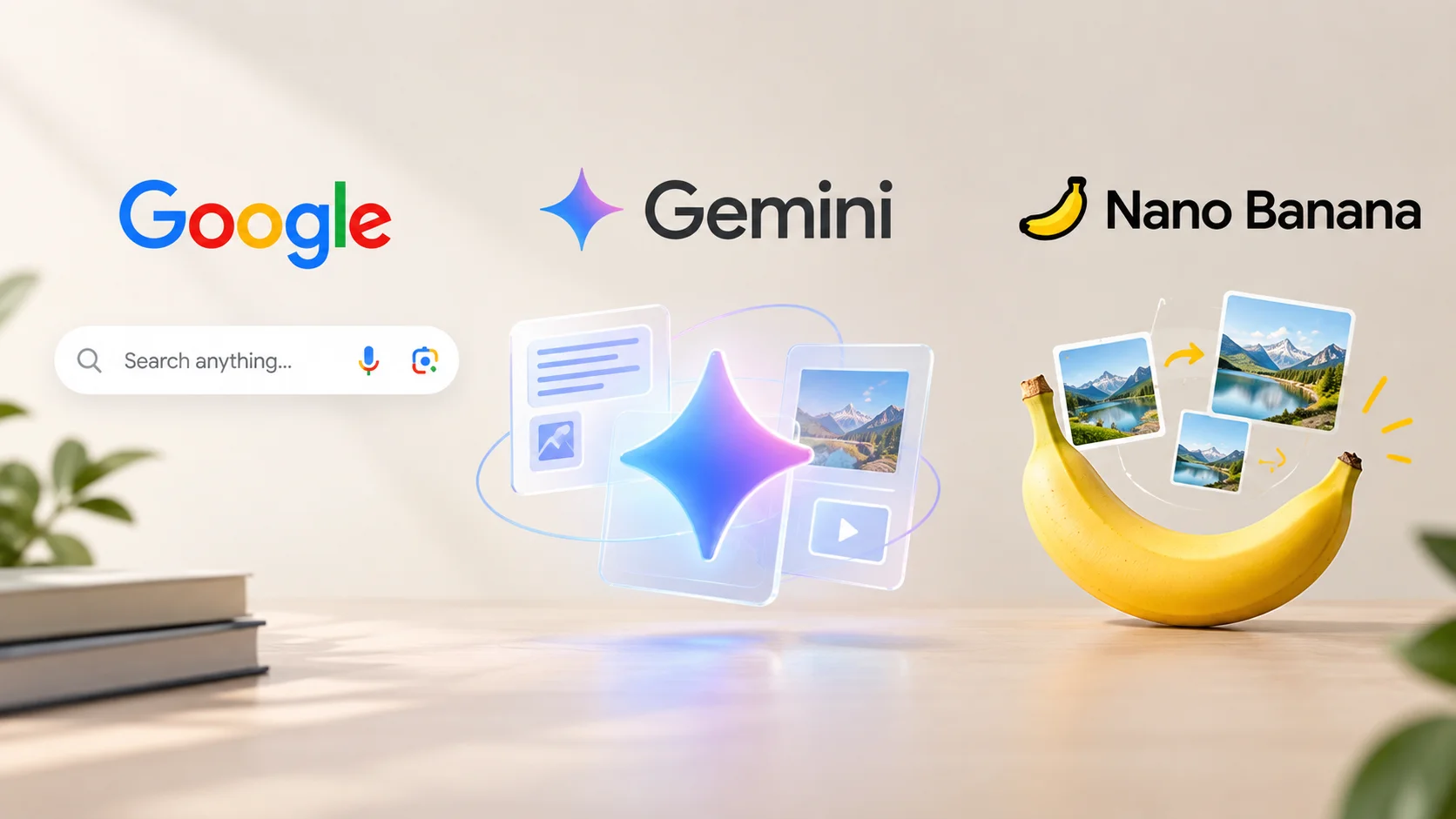
We cover it in full in our Gemini Nano Banana guide — how to use it, what it's good at, and where it still falls short for portrait work. That last part is worth flagging here too: like most open-ended AI editors, Nano Banana can drift on long edit chains, and results depend heavily on how precisely you write the prompt.
Want portrait editing that doesn't depend on a prompt (or a product roadmap)?
While the AI world waits on Gemini 4, Movcl already handles face swap, outfit change, and style redraw from one uploaded photo — through fixed templates, not an open prompt box that needs to be argued with.
Frequently Asked Questions
Is Gemini 4 Pro real?
"Gemini 4" is real and confirmed by Google to be in development, currently in post-training as of September 23, 2026. "Gemini 4 Pro" specifically is not an official name Google has used — it's a community assumption based on how past Gemini versions were named.
When will Gemini 4 be released?
No official date. Google has said it wants to ship before the end of 2026, and DeepMind's AI lead said as of September 23 the team hopes to release "much earlier" than that, starting with an early post-trained version. Prediction markets and analyst estimates cluster around October through December.
Does Gemini 4 have a 10 million token context window?
There's no credible evidence for this. It traces back to a single unverified social media account and should be treated as unconfirmed at best.
Can I use Gemini 4 Pro's API right now?
No — the model hasn't been publicly released. Any site currently selling "Gemini 4 Pro API access" is not connected to an official Google release.
Sources: Google DeepMind official blog, Google Q2 2026 earnings call, The Information (AI Agenda Live summit remarks), CellCog, Investing.com, TradingView, AI Weekly, MindStudio, TechGenyz, Geeky Gadgets, and community reporting on Arena/LMSYS model sightings. Unverified claims are identified as such throughout; this article reflects publicly available information as of September 24, 2026, and will be outdated the moment Google actually announces something.