
Why Do AI Short-Drama Leads All Look Kind of Familiar? Inside the 2026 Boom
The category is exploding on TikTok — and viewers keep noticing the same faces.

Scroll enough AI short dramas and you'll start recognizing a face you swear you've seen in a different show. That feeling has a technical explanation.
Key takeaways
- By 2026, script generation, storyboarding, scene rendering, and voice or music production are increasingly handled end-to-end by AI tools, which is a major reason studios can release entire 45-to-80-episode seasons at a pace live-action production can't match.
- Many viewers have noticed that AI short-drama leads look eerily familiar — like a blend of several actors rather than one distinct person. That reaction tracks with a real, well-documented pattern in how generative models render faces.
- When a character is described only by role and vibe ("ruthless CEO," "naive heiress") rather than anchored to one specific reference photo, generative models tend to default to a statistically probable, composite-feeling face rather than a truly unique one.
- There's a second, non-technical reason for the repetition: reusing a small library of proven, audience-tested face templates across many different shows is simply cheaper and faster than generating and validating a new one for every release.
- When a generated face happens to closely resemble a real, identifiable person, it raises a genuine — and still legally unsettled — right-of-publicity question, separate from who owns the copyright to the show itself.
Open TikTok right now and there's a decent chance a 60-second clip autoplays with a title like "The CEO's Fake Wife Was Secretly a Billionaire All Along," a cliffhanger ending mid-sentence, and a "Part 47" caption. AI-generated short dramas — vertical, serialized, cliffhanger-driven, and increasingly produced without a single human actor — have gone from a curiosity to one of the platform's fastest-growing categories in a matter of months. And if you've watched more than a couple of these shows, you've probably had the same odd reaction a lot of viewers report: the lead looks like someone, but not quite anyone in particular.
The boom, by the numbers
The scale of this shift is easy to underestimate if you've only encountered it in your own feed. TikTok added a dedicated "Short dramas" entry point to its main navigation in 2026, placing it alongside Shop, Explore, and LIVE, and launched a standalone companion app, PineDrama, alongside original micro-drama productions made in partnership with Issa Rae's production company, HOORAE. In the US specifically, the platform tested a dedicated short-drama hub, and one AI-generated parody drama, Untamed, reportedly crossed 500 million views.
The revenue picture tells a similar story of a category scaling fast:
| Metric | Reported figure |
|---|---|
| TikTok short-drama creator revenue share, Q1 2026 | Surpassed $24 million |
| Platform-wide short-drama traffic, year over year | Up roughly 5x |
| Average time spent per user on short dramas | Up roughly 3.5x |
| AI-specific short-drama revenue share, single quarter | Surpassed $2 million, up over 6x quarter over quarter |
| Overseas AI short-drama/comic market size, 2025 vs. 2026 (est.) | Roughly $100M → a projected $650M |
| Share of overseas viewers willing to pay | Reportedly over 50% |
Established players are scaling with it. Long-running short-drama apps ReelShort and DramaBox each reportedly approached $140 million in quarterly revenue, while newer entrant FreeReels reportedly passed 100 million installs in a single quarter. By the first half of 2026, Chinese-founded short-drama apps reportedly occupied the top five spots on US entertainment download charts, and TikTok's own monthly short-drama revenue share reportedly topped $21 million.
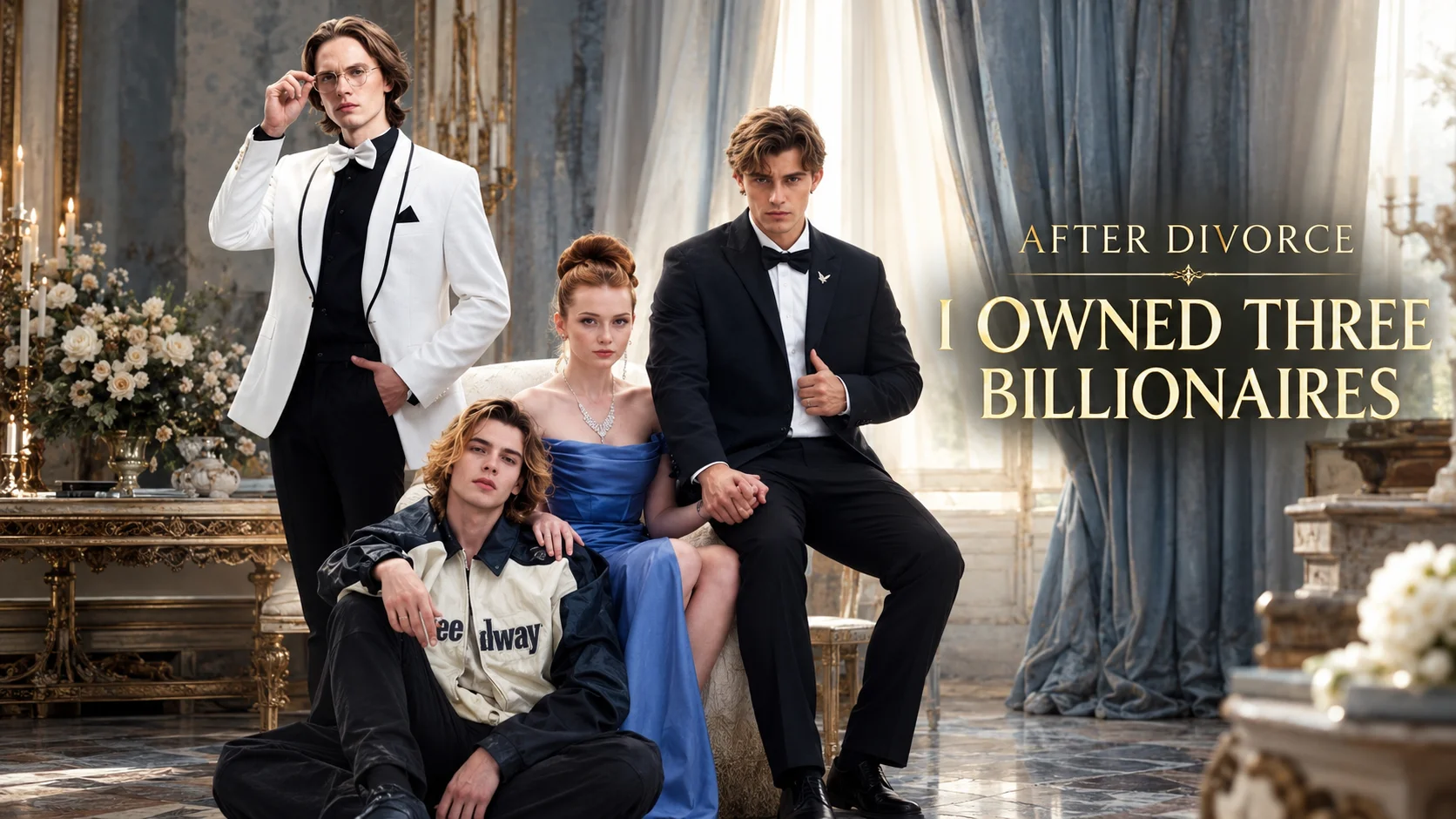
The content formula behind these numbers is fairly consistent: 60-second episodes built around a strong reversal — a discarded wife returns to crash her ex's wedding, a "werewolf bride" turns out to be secret royalty, a domineering CEO falls for someone far beneath his social station — each ending on a cliffhanger built to trigger the next tap. A hit season runs anywhere from 45 to 80 episodes, and top-performing individual episodes have reportedly pulled in 10 to 15 million-plus likes.
How an AI short drama actually gets made
What's changed by 2026 isn't just that these shows are popular — it's how much of the production pipeline no longer requires a film crew at all. Script generation, shot-by-shot storyboarding, scene rendering, and voice or music production are all increasingly AI-assisted or fully AI-generated, chained together into something closer to a content assembly line than a traditional production. A studio can go from concept to a finished, dozens-of-episodes season in a fraction of the time and cost that live-action filming, casting, and editing would require.
That speed is exactly why this category can absorb so much volume — and exactly why the "familiar face" problem shows up as often as it does. When you're generating faces for dozens of shows and hundreds of episodes a month rather than casting individual actors for each one, the economics push hard toward reuse and toward whatever face a model can produce reliably on the first try.
The "wait, don't I know that face?" effect
Scroll through enough of these shows and the pattern becomes hard to unsee: a jawline from one lead shows up again in a completely different show's male lead; a heroine's eyes and mouth look assembled from two or three familiar-feeling faces at once. It's not that any single character is copied wholesale from a real actor — it's a more diffuse, unsettling familiarity, like meeting someone who reminds you of three different people you've met before. There are two separate reasons this keeps happening, one technical and one purely economic.
Reason one: generative models default to the statistical average
Most of these productions don't generate a character's face from one fixed, specific reference photo the way a face-swap app anchors to your uploaded selfie. Instead, a character is usually described by role and vibe — "ruthless billionaire CEO, sharp jawline, cold expression" or "innocent young heiress, delicate features" — and the model generates a face that statistically fits that description, based on everything it learned from its training data.
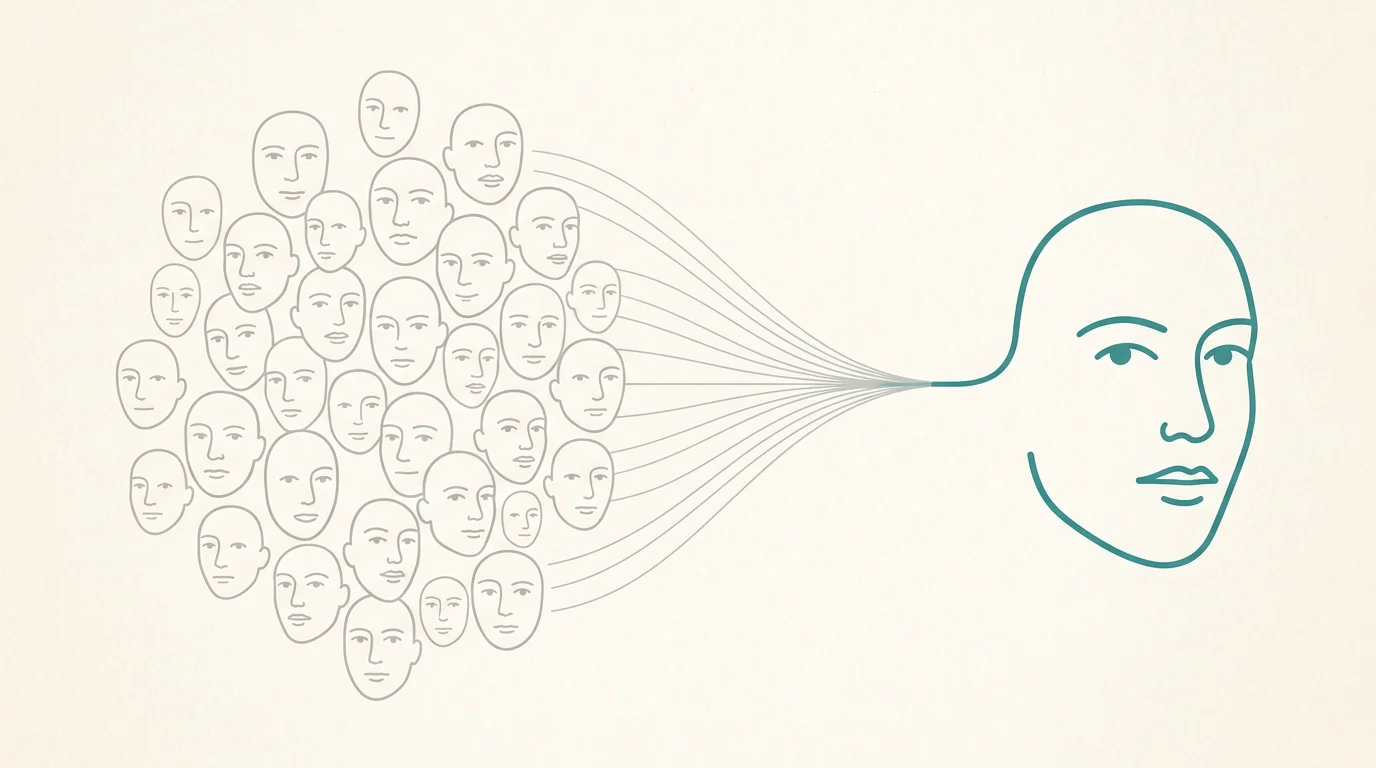
This is where generative models have a well-documented tendency: when the identity signal guiding a face is weak or generic rather than tightly anchored, the output tends to regress toward whatever face pattern is most probable for that description, given the training distribution. In practice, that means a disproportionate pull toward faces that were common, well-lit, front-facing, and tagged with similar descriptors in the training data — often stock photography and heavily represented celebrity or influencer imagery. The result isn't a copy of any one person; it's closer to a composite drawn from whichever faces the model has seen most often in that particular style, which is exactly why a generated lead can feel like "a blend of three people you recognize" without matching any one of them precisely.
The model isn't trying to look like anyone in particular. It's trying to be the most statistically plausible face for the description it was given — and "most plausible" quietly means "most represented in what it learned from."
Reason two: reusing a proven face is simply cheaper
The second reason has nothing to do with model behavior and everything to do with production economics. Once a studio finds a face template — human or AI-generated — that tests well with audiences, reusing it across multiple shows and characters is faster and cheaper than generating and validating a brand-new one every time. Change the hair, wardrobe, and lighting, and the same underlying face model can plausibly headline a completely different "character" in an unrelated show. At the volume these studios are releasing content — dozens of shows, thousands of episodes — that kind of template reuse isn't a technical accident. It's a deliberate cost-and-speed decision, not unlike stock photography sites reusing the same handful of models across thousands of different ad campaigns.
Where this crosses into a legal gray zone
Both explanations above describe faces that feel familiar without being a deliberate copy of one specific, identifiable person. But the line isn't always that clean. If a generative model's output happens to converge closely enough on a real, identifiable individual's actual likeness — an actor, an influencer, or simply someone whose photos were heavily represented in a training set — that raises a separate legal question from anything about copyright or story ownership: the right of publicity, which in the US varies significantly by state and is still being actively tested in court as it applies to AI-generated likenesses.
This is a genuinely unsettled area, not something a general explainer can resolve, and studios producing this content at scale are operating in front of the law rather than behind clear precedent. It's also a big part of why the underlying identity technology matters so much in adjacent categories — including the kind of face-swap and outfit-change apps we've covered on this blog, where a photo comes from one specific, consenting person rather than a statistical blend. We go deeper into how that identity-handling actually works in our breakdown of AI face swap technology, which covers the same underlying identity-embedding concepts from a different angle.
What this means going forward
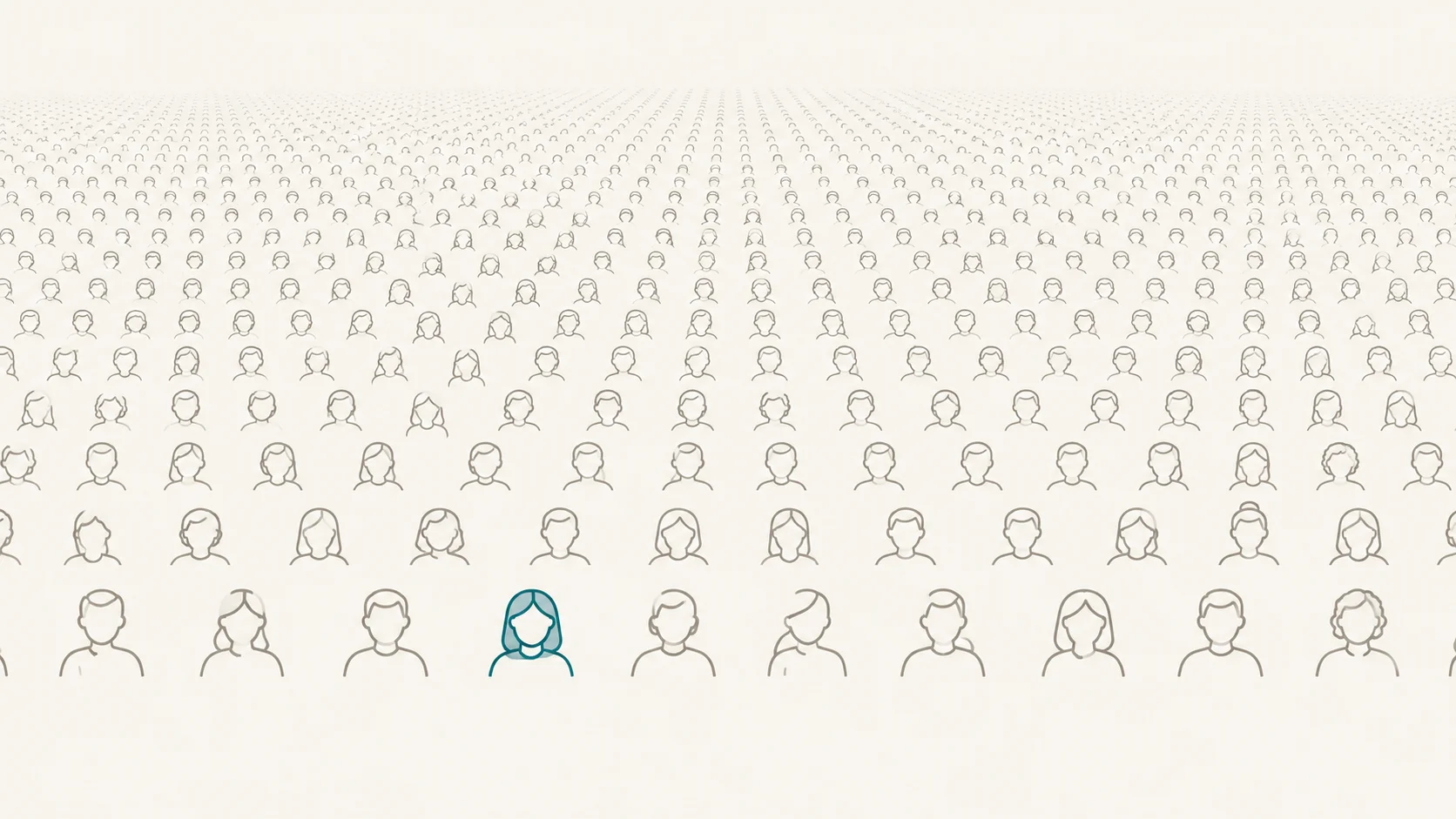
None of this is likely to slow the category down — the revenue numbers above suggest the opposite. But it does mean two trends are likely to keep intensifying together: studios will keep pushing production speed and volume higher, and the "familiar face" effect will probably get more noticeable, not less, as more shows draw from the same statistically favored regions of face-generation models and the same small libraries of reusable templates. Expect more scrutiny — from platforms, from regulators, and from audiences themselves — over exactly whose face is showing up on screen, and whether anyone involved actually agreed to it.
Frequently asked questions
Why do AI short-drama characters often look like a mix of different celebrities?
It's a combination of two factors: generative models tend to default to a statistically "average" face when only given a role description rather than a specific reference photo, and studios often deliberately reuse the same proven, audience-tested face templates across multiple shows to save time and production cost.
Are AI short dramas actually fully generated by AI?
Increasingly, yes, across most of the pipeline — script generation, storyboarding, scene rendering, and voice or music can all be AI-assisted or AI-generated today, which is a major reason studios can release new episodes and full seasons far faster than traditional live-action production allows.
Is it legal for an AI-generated character to resemble a real person?
This is a genuinely unresolved area of law. When a generated face closely and identifiably resembles a specific real person without their consent, it can raise right-of-publicity concerns distinct from copyright — but the rules differ significantly by jurisdiction and are still being worked out in court, so this isn't something a general explainer can answer definitively.
Is the short-drama boom mostly an AI story, or a broader trend?
Both. Short-form vertical drama was already growing quickly before generative AI got heavily involved, but AI production is now the fastest-growing slice within that category, since it lets studios produce far more episodes at a much lower cost per episode.