
How AI "Understands" Clothing: The Tech Behind AI Outfit Swap Apps
It's not simulating fabric. It's remembering what fabric usually looks like.
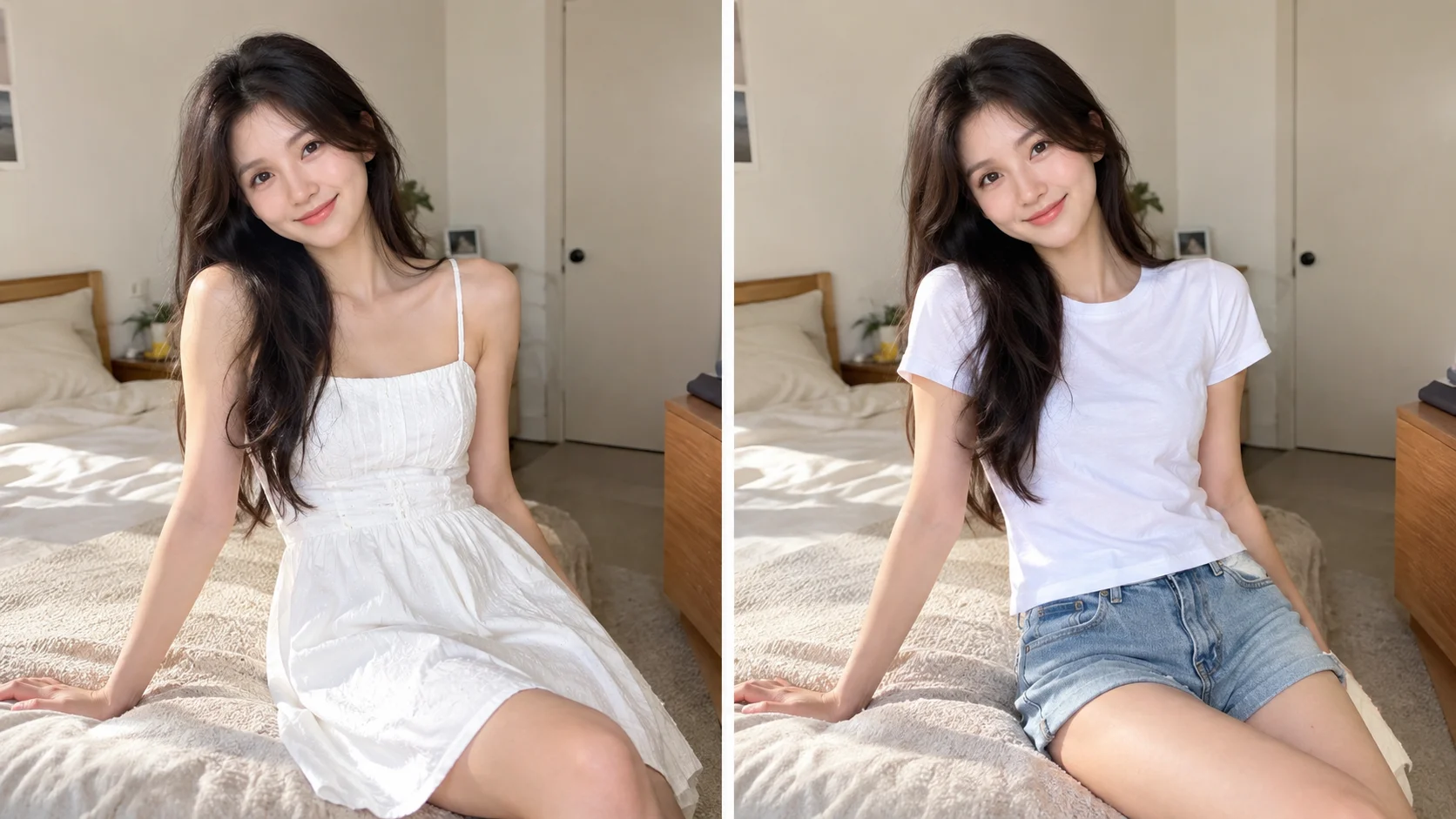
Key takeaways
- AI outfit swap has to solve two problems at once: understanding the body's pose and shape, and understanding the garment's structure, texture, and pattern — then combining the two convincingly.
- Pose estimation models map a body onto a skeleton of keypoints (shoulders, elbows, hips, knees), which tells the system how a garment needs to bend and fold to fit that specific position.
- There are two broad technical approaches: warping the actual pixels of a reference garment image to fit the body's shape, or generating an entirely new image of the clothed body from scratch, typically with a diffusion model.
- Warping preserves exact patterns and logos but can look stiff or geometrically off; generation tends to produce more realistic folds and lighting, at some risk of drifting away from the reference garment's exact details.
- Critically, none of this involves actual cloth physics simulation. The model has learned a statistical visual habit — what fabric tends to look like draped over a body in a given pose — from huge numbers of example photos, not a calculated simulation of how fabric behaves.
Face swap, which we covered in an earlier piece on this blog, has a relatively contained problem to solve: one face, roughly one shape, sitting in a roughly predictable region of an image. Outfit swap is a noticeably harder problem wearing a simpler-sounding name. Clothing deforms constantly with body movement, gets partially hidden by arms and hair, stretches differently across different body shapes, and behaves completely differently depending on the material — silk moves nothing like denim. Understanding how AI handles all of that starts with recognizing it's solving two separate problems at once.
Two problems at once: the body, and the garment
Reading the pose
Before a system can put a garment on a body convincingly, it needs to know exactly how that body is positioned. This is done with pose estimation — a model that maps the person in a photo onto a skeleton of keypoints: shoulders, elbows, wrists, hips, knees, ankles, and often a rough estimate of body shape and proportions underneath clothing. This is a well-established computer vision task, and it produces the structural scaffold that determines exactly how a garment's sleeves, hem, and waistline need to bend and fall for that specific pose.
Reading the garment
Separately, the system needs to understand the actual garment being applied — whether that's a photo of a real clothing item or a stylized template. This typically involves segmentation, isolating the garment from its background and breaking it into meaningful parts (sleeve, collar, hem), along with extracting its texture, color, and pattern. On the target photo, a parallel segmentation step identifies which pixels are currently "clothing" on the person, versus skin, hair, or background — since those regions need to be replaced or adjusted, while everything else in the photo needs to stay untouched.
Two ways to actually put the clothes on
Once the system understands the pose and the garment, there are two broadly different technical strategies for combining them, and most real products use some version of one or a hybrid of both.
Warping: bend the real pixels to fit
The older, more classical approach — the foundation of academic virtual try-on research over the past several years — works by computing a geometric transformation (sometimes called a flow field or a thin-plate-spline warp) that stretches and bends the actual pixels of the reference garment image to align with the target body's pose and proportions, then blends the warped result onto the photo. Because it's manipulating the real garment pixels rather than inventing new ones, warping is generally strong at preserving exact patterns, logos, and colors precisely as they appear in the source image. Its weakness shows up at the edges of what geometric stretching can plausibly do — complex folds, self-occlusion (a sleeve overlapping the torso), and materials that should behave very differently under movement can end up looking geometrically stiff or subtly "pasted on."
Generation: synthesize a new image from scratch
The newer approach, increasingly built on diffusion models, doesn't warp existing pixels at all — it generates an entirely new image of the person wearing the garment, conditioned on both the pose information and a representation of the garment's texture and structure. Because the model is generating fresh pixels rather than stretching existing ones, it can produce far more convincing folds, shadows, and material-appropriate draping. The trade-off is a different kind of risk: since the model is synthesizing rather than directly transplanting, it can subtly drift from the exact reference garment — a slightly different shade, a logo that isn't quite crisp, a pattern that doesn't repeat with perfect consistency.
Warping asks: how do I bend this exact garment to fit this body? Generation asks: what would this body wearing something like this garment probably look like?
The important thing this isn't: physics simulation
This is worth being precise about, because it's easy to assume otherwise: AI outfit swap models are not running a physics simulation of how fabric behaves. Film and game visual effects have long used actual cloth physics engines — software that calculates gravity, tension, and collision on a simulated mesh to determine exactly how fabric would fold given its material properties. Generative outfit-swap models do none of that math. What they've learned, from training on enormous numbers of real photos of people wearing clothes in various poses, is closer to a deeply internalized visual habit: "in images I've seen, fabric that looks like this, on a body positioned like this, tends to fold roughly like this." That's a statistical pattern-matching process, not a calculation — and the difference matters, because it explains exactly where these systems tend to break.
Where outfit swap still struggles
Because the underlying mechanism is learned visual precedent rather than simulation, the failure points are predictable once you know what to look for:
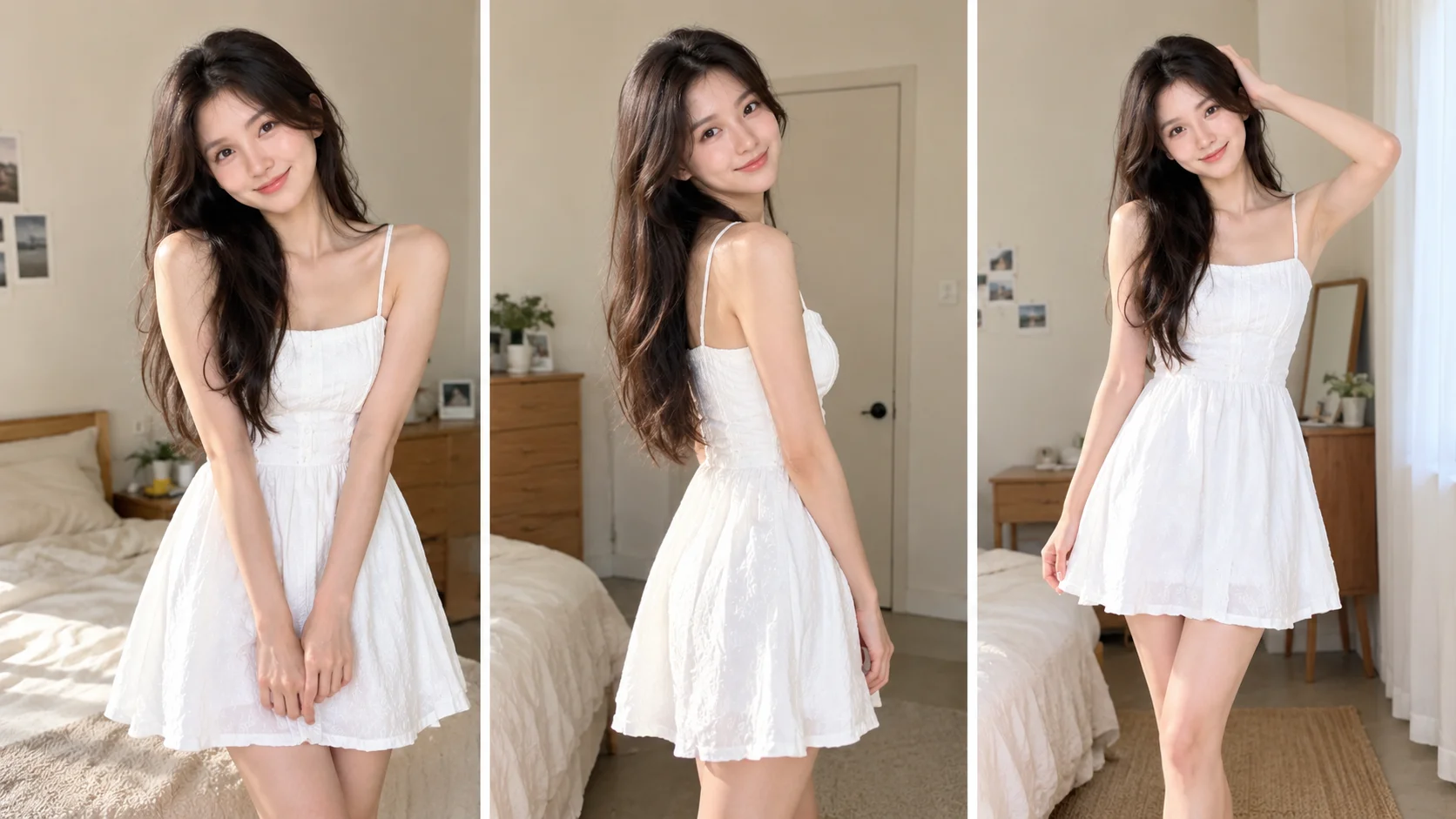
- Unusual poses. Training data skews toward common, front-facing, standing or sitting poses. A pose the model has seen less often — a dynamic action shot, an unusual arm position — gives it less reliable precedent to draw from.
- Occlusion. Long hair falling over a shoulder, a hand resting on the hip, or one arm crossing the torso can confuse the segmentation step about exactly where the garment boundary should be.
- Fine, repeating patterns. Plaid, sequins, lace, and tight repeating prints need to stay geometrically consistent while bending across a warped or regenerated body — exactly the kind of precise, high-frequency detail that's difficult for both warping (which can distort repeat spacing) and generation (which can lose fine repeat consistency).
- Unusual materials. Transparent fabric, high-gloss materials, and anything with complex light interaction (sequins, metallic thread) behave in ways the model has proportionally less training exposure to compared to plain cotton or denim.
- Lighting mismatches. As with face swap, the final result still needs the garment's lighting and shadow direction to match the rest of the photo — a garment reference shot under different lighting than the target photo can leave a visible inconsistency.
| Approach | Strength | Weakness |
|---|---|---|
| Warping | Preserves exact pattern, logo, and color | Can look geometrically stiff under complex poses or folds |
| Generative (diffusion-based) | More realistic folds, shadows, and draping | Can drift slightly from the exact reference garment's details |
Templates used in apps like the outfit-change feature on Movcl are generally built around poses and garments the underlying models handle well, which is part of why template-based results tend to look noticeably more convincing than trying to apply an outfit to an arbitrary, unusual photo — the system is working with precedent it has actually seen a lot of, rather than being asked to improvise.
A quick glossary
- Pose estimation
- Detecting a body's position by mapping it onto a set of keypoints (shoulders, elbows, hips, and so on), used to determine how a garment should fit and bend.
- Segmentation
- Dividing an image into labeled regions — separating a garment from its background, or separating a person's current clothing from their skin, hair, and background.
- Warping
- Geometrically stretching and bending the actual pixels of a reference image to align with a new shape or pose, without generating new pixel content.
- Cloth physics simulation
- A calculation-based method, used in film and game visual effects, that models fabric behavior using gravity, tension, and material properties — distinct from the learned, statistical approach used by generative outfit-swap models.
Frequently asked questions
Does AI outfit swap actually simulate how fabric physically behaves?
No. Unlike physics engines used in CGI or gaming, AI outfit swap models don't simulate cloth physics at all. They've learned a statistical visual habit from millions of example photos of how different fabrics tend to drape over bodies in different poses, which is different from actually calculating fabric behavior.
Why do unusual poses sometimes produce strange-looking clothing in AI outfit swap results?
Because the model is drawing on patterns it has seen most often in training data, which tends to be common, front-facing poses. Unusual angles, crossed arms, or complex poses are underrepresented, so the model has less reliable visual precedent to draw from, and folds or proportions can look physically implausible.
What's the difference between warping and generating a new outfit onto a photo?
Warping takes the actual pixels of a reference garment image and geometrically stretches them to fit a person's pose, preserving exact patterns and logos but sometimes looking stiff. Generating uses a model like a diffusion network to synthesize a new image of the garment on the body from scratch, often producing more realistic folds and lighting, at some risk of drifting from the exact reference pattern.
Why do fine patterns, logos, or sequins sometimes look distorted after an AI outfit swap?
Fine, precise, repeating detail is generally the hardest thing for these models to preserve accurately, especially once it has to bend and fold across a warped or regenerated body shape. This is the same category of weakness that causes hands and small objects to look off in other kinds of AI-generated images.