
Nano Banana 2.1: What We Actually Know About Google's Next Image Model (and What's Just Noise)
A new name showed up in Google Flow's code over the weekend. Here's every leak so far, how much each one is actually worth, and what's already available today.
The short version: "Nano Banana 2.1" is real as a label, but it has exactly one source: a string that TestingCatalog found in Google Flow's web code on September 27. Google hasn't announced it, and there's no official feature list, price, or date.
What's likely: Google is preparing a Flash-tier successor to Nano Banana 2, it's already wired into Flow, and its name just changed from "2.5 Flash" to "2.1."
What's worth doing now: nothing drastic. If you build on the original Nano Banana API, note its October 2 retirement date. Everyone else can keep using what works.
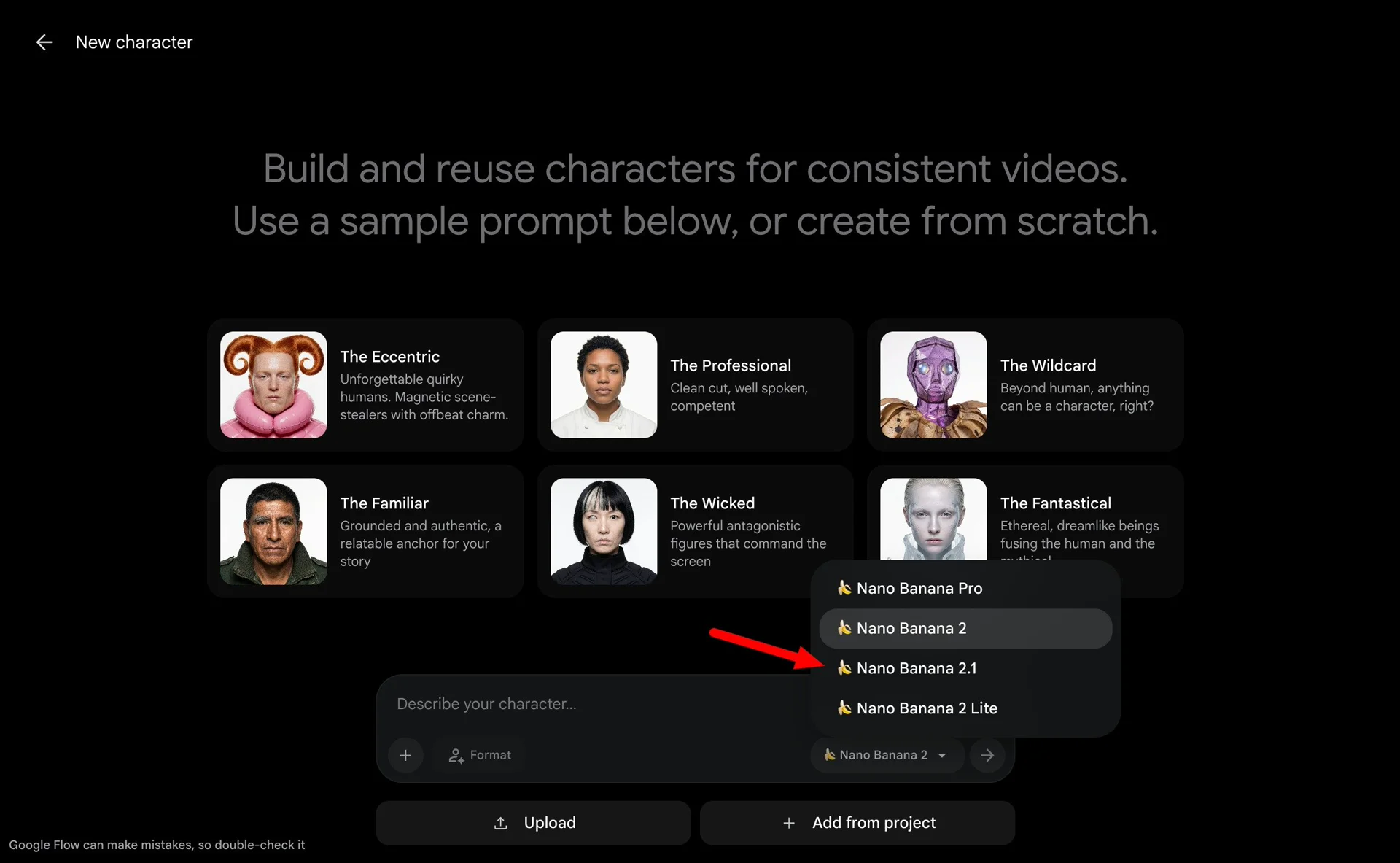
Where the name "Nano Banana 2.1" came from
On September 27, TestingCatalog, the site that tracks unreleased features inside Google's products, published a short post: a new build of Google Flow had swapped a model label that previously read "Nano Banana 2.5 Flash" for one that reads "Nano Banana 2.1."
That's the whole primary source. Every other article you'll see about Nano Banana 2.1 today, including this one, traces back to that post. The author, Alexey Shabanov, offered a reasonable reading: going from 2 to 2.1 usually signals an incremental update rather than the big jump "2.5" would imply, and 2.1 may well be the name it ships under. He was also upfront that there's no timeline and that Google hasn't said what's improved over Nano Banana 2.
If you've been following Google's image models, that renaming is the interesting part. A version number is a small promise about how much has changed. Walking it back from 2.5 to 2.1 suggests someone inside Google decided the upgrade should be framed as a refinement.
The full leak timeline, rated for reliability
The name didn't appear out of nowhere. Here's everything that's surfaced this month, in order, with an honest rating of how much weight each piece can bear. Five dots means "a track-record source saw it directly." Two dots means "unverified accounts, repeated by aggregators."
-
Sep 5
"Nano Banana 2.5 Flash is in the works"
TestingCatalog mentions it in a single line while covering Google's push to turn the Gemini desktop app into a "super app." It's the first public appearance of the name. TestingCatalog has a good record (it flagged Nano Banana 2 before launch), but this was one sentence with no detail.
Reliable source, almost no detail -
Sep 9
An anonymous model called "spicy-mayo" appears on Image Arena
Testers on X, including @LuminaBench and @synthwavedd, ran into it in Arena's blind comparisons. The community quickly pegged it as Google's next Nano Banana and started calling it "Nano Banana 2.5." The model clearly exists, and the Google attribution is plausible. Which version it corresponds to is anyone's guess.
Model is real; identity is inferred -
Sep 18
Claims of a partner preview on Vertex AI
A few small X accounts claimed some partners could test a model with the ID nano-banana-2.5, three thinking levels (minimal, medium, high), and output from 512px to 4K. Aggregator sites and some overseas tech outlets repeated it. The same circles predicted a launch the week of September 21. It didn't happen.
Unverified, and its prediction missed -
Sep 24
"Nano Banana 2.5 Flash" spotted inside Google Flow
TestingCatalog posts a screenshot with one word: "Soon?" No specs, no pricing, no date. But it moves the model from "rumored" to "present in a shipping Google product's code."
Direct evidence, no specs -
Sep 27
Flow's label changes to "Nano Banana 2.1"
The same slot is renamed in a newer build. This is the only first-hand source for the 2.1 name. Other outlets covering it are relaying this post without new information.
The one primary source for "2.1"
What testers said about spicy-mayo
If spicy-mayo is the model behind the Flow label (and to be clear, nobody has shown that it is), the early impressions give a rough sense of direction:
- A noticeable step up from Nano Banana 2, with text in posters and product shots rendering cleanly.
- Weaker world knowledge than OpenAI's GPT-Image 2.5.
- Shaky on logic-heavy prompts; one widely shared attempt at a Rubik's cube came out wrong.
- One tester comparing Minecraft-style scenes felt textures and speed had improved.
Treat all of this as scattered, subjective feedback. There's no leaderboard ranking and no benchmark numbers behind any of it.
What to ignore (for now)
Rumor cycles attract filler. Three kinds are circulating around this one.
Feature lists with no source
Some tech blogs are publishing detailed spec sheets for "Nano Banana 2.5 Flash": a sparse mixture-of-experts architecture, three-image fusion, SynthID watermarking, 4K output. None of them cite where this came from. Most of it is simply what Nano Banana 2 already does, plus guesswork. Don't read these as specs for the new model.
Price "leaks"
You'll see figures around $0.03 to $0.07 per image. Those are extrapolations from Google's current price list, not leaked numbers. They're a sensible guess, and nothing more.
Lookalike websites
Every time a Google model name trends, a wave of domains with "nano," "banana," or the Arena codename in them appears. They're not run by Google. Some are SEO plays; some resell API access; and you have no way of confirming what model a third-party site is actually running behind the name. If you want the real thing, Google's official channels are the Gemini app, Google AI Studio, the Gemini API and Vertex AI, and Google Flow.
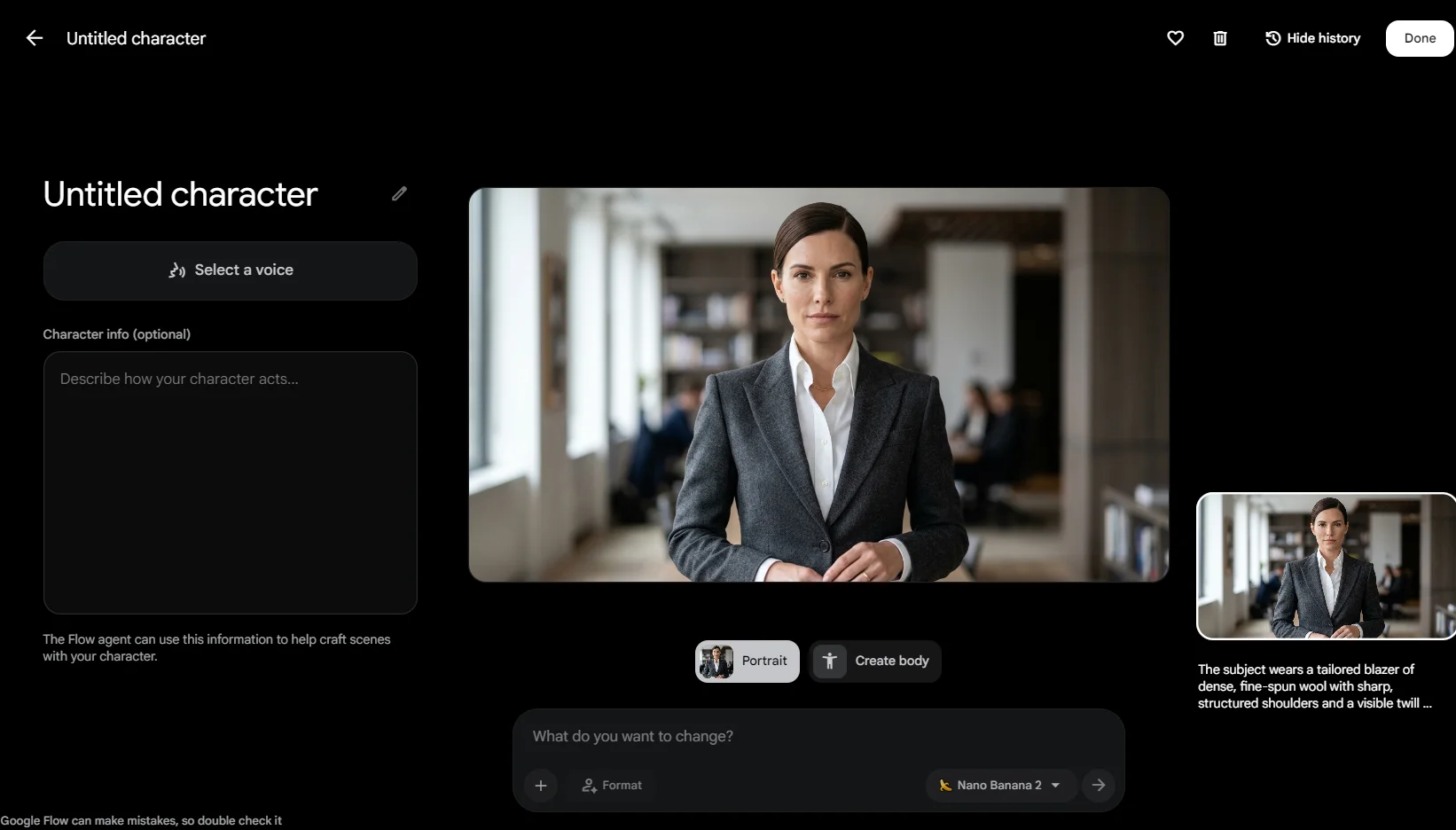
One more honest caveat: the idea that spicy-mayo and Nano Banana 2.1 are the same model is a timeline-based inference. It's plausible. It isn't proven. Anyone presenting it as fact is getting ahead of the evidence.
What's actually out right now: the current Nano Banana lineup
While we wait, here's the officially released family, which is what you can use today. (For how each one works and when to pick which, see our complete guide to Gemini Nano Banana.)
| Name | Official model | Status |
|---|---|---|
| Nano Banana | Gemini 2.5 Flash Image | Being retired. Gemini API shutdown is October 2, 2026; Vertex AI docs say March 15, 2027. The two sources don't match. |
| Nano Banana Pro | Gemini 3 Pro Image | Available |
| Nano Banana 2 | Gemini 3.1 Flash Image | Available since February 26, 2026 |
| Nano Banana 2 Lite | Gemini 3.1 Flash-Lite Image | Available since June 30, 2026 (launched alongside Gemini Omni Flash); about $0.034 per image at 1K |
| Nano Banana 2.1 | Unknown | Unannounced. Seen only as a label in Google Flow. |
If you're a developer still calling Gemini 2.5 Flash Image through the Gemini API, the October 2 date is the one piece of this story that actually affects you this week. Plan your move to Nano Banana 2 or 2 Lite now rather than waiting for 2.1, and check the deprecation page for whichever platform you're on, since Google's own docs currently disagree.
So when will it launch? Our read
Google has shipped a Nano Banana release roughly every 86 to 124 days: the original in August 2025, Pro in November 2025, Nano Banana 2 in February 2026, and 2 Lite at the end of June. Counting forward from June 30, that window runs from late September to about the start of November. Add the original model's API retirement on October 2, and a near-term release looks more likely than not.
Some outlets have also floated the idea that Gemini 4 could arrive before the end of the year and that 2.1 might launch alongside it. That's pure speculation, and we wouldn't plan around it.
| Confidence | What we can say |
|---|---|
| Fairly certain | Google is preparing a Flash-tier image model to follow Nano Banana 2. It's already integrated into Flow. Its label changed from "2.5 Flash" to "2.1." |
| Likely | Spicy-mayo on Image Arena is the same model. A release in the next several weeks, given Google's cadence and the October 2 retirement. |
| Unknown | Release date, price, specific improvements, and whether "2.1" is the final name. |
What this means if you just want better photos of yourself
Here's the part that tends to get lost in model-release coverage. Nano Banana 2.1 will almost certainly be a better general-purpose image model. Better text rendering, likely faster, possibly cheaper. That matters a lot if you make posters, product shots, thumbnails, or concept art.
But most people who get excited about a new Nano Banana aren't making posters. They want to see themselves in a different outfit, try a new style, turn a selfie into an anime portrait, or make a short clip from a single photo. For that, a general model gives you a blank prompt box and asks you to do the directing: describe the look, keep your face consistent across edits, fix what drifted, try again.
That's a genuinely different job from what a purpose-built portrait tool does, and it's why a better general model doesn't automatically make portrait editing easier. We walked through this trade-off in more depth in our five-tool comparison of ChatGPT, Gemini, Midjourney, Adobe Firefly, and Movcl, but the short version looks like this:
| If you want to… | A general model like Nano Banana | Movcl |
|---|---|---|
| Design a poster or product image with text | Strong fit, and 2.1 will likely be stronger | Not what it's built for |
| Swap your face into a scene | Possible with careful prompting and retries | Upload one photo, pick a template |
| Try on an outfit or style | You write the prompt and manage consistency | Template-driven outfit change |
| Turn a photo into anime or another art style | Works; results vary by prompt | AI redraw templates tuned for portraits |
| Make a short video from one photo | Needs a separate video model | Built in as AI short video |
| Know what happens to your photos | Depends on the product and settings you use | Privacy-first: your photos aren't used to train models |
Neither approach is "better" across the board. If you like prompting and want maximum control, the Nano Banana family is excellent, and it's worth trying 2.1 the day it lands. If you'd rather skip the prompt engineering and get a good result of yourself in a couple of taps, that's the gap Movcl was designed to fill.
(And if privacy is the deciding factor for you, our piece on whether AI apps train on your photos explains what to look for in any app's policy.)
Frequently asked questions
Has Google released Nano Banana 2.1?
No. As of September 28, 2026, Google hasn't announced it. The name comes from a single label in Google Flow's web code, reported by TestingCatalog on September 27. There's no official feature list, price, or release date.
Is Nano Banana 2.1 the same as Nano Banana 2.5 Flash?
Probably. The same spot in Flow read "Nano Banana 2.5 Flash" on September 24 and "Nano Banana 2.1" in a newer build three days later, which looks like a rename rather than two separate models. Google hasn't confirmed either name.
Is spicy-mayo on Image Arena a Google model?
Most testers think so, but anonymous Arena models are unconfirmed by design. There's no direct evidence linking spicy-mayo to the Nano Banana 2.1 label in Flow.
When is the original Nano Banana being retired?
The Gemini API lists October 2, 2026 for Gemini 2.5 Flash Image. Vertex AI's documentation lists March 15, 2027. Check the page for the platform you use.
Where can I use Nano Banana officially?
Through the Gemini app, Google AI Studio, the Gemini API and Vertex AI, and Google Flow. Sites with "Nano Banana" in the domain name aren't run by Google.
How can I tell whether an image was made with a Nano Banana model?
Google marks its generated images with SynthID, but a watermark isn't something you can see by eye. For practical checks you can do yourself, see our guide on 5 ways to tell if a photo was made with AI.
Sources
- TestingCatalog, "New Google Flow build now points to Nano Banana 2.1" (September 27, 2026)
- TestingCatalog, coverage of the Gemini desktop "super app" changes, and TestingCatalog on X (September 5, 2026)
- TestingCatalog on X, "Nano Banana 2.5 Flash" in Google Flow (September 24, 2026)
- Posts by @synthwavedd and @LuminaBench on X about the spicy-mayo Arena model
- Google Blog, announcement of Nano Banana 2 Lite and Gemini Omni Flash
- TechCrunch, coverage of the Nano Banana 2 launch
- Digital Applied, on the October 2 retirement of Gemini 2.5 Flash Image
- Secondary coverage and aggregator posts (OrcaRouter, ProgressiveRobot, NokiaPowerUser, kie.ai, Azat TV), used only to document what's circulating, not as evidence
This article covers unreleased products. Details may change, and we'll update this page when Google makes an official announcement.