


How Did My Face End Up in a Short Drama?
Key takeaways
- A handful of public photos can be enough to let your face end up in a short drama. Also, Not every AI-drama face is a stolen face.
- The volume is huge and rising. Owl & Co. found that two-thirds of the 20 biggest microdramas released outside China in Q3 2026 were AI-generated, and Omdia expects US microdrama revenue to reach $1.5 billion this year.
- If you spot yourself, preserve evidence before you report. In the Peach Blossom Hairpin case, the disputed characters were quietly swapped while the show kept streaming. TikTok’s rules ban synthetic media that uses an adult private figure’s likeness without permission. US federal law has a gap: the NO FAKES Act cleared a Senate committee unanimously but stalled on September 30, and we found no report that it has passed as of today.
- Same technology, opposite permission. Starring in an AI drama you chose, using your own photo and a clear label, is a different thing from being cast without asking. Consent is the whole difference.
The Lord’s Secret Human Child
Reborn at 10: The World’s Greatest Nanny
Impossible: My Kids Are Not Human
The Odyssey
Return of the Black Titan
My Impotent Husband’s Secret Addiction
AI dramas on TikTok are so interesting, and I can’t believe I watched a whole series on there!
Now imagine the other version of that scroll. You are not an actor and you never auditioned, but a friend sends you a clip and asks, “Is this you?” You press play, and the face on screen is yours, playing a character you would never choose.
Most articles about AI dramas stop at the controversy.
Why your feed is suddenly full of AI dramas
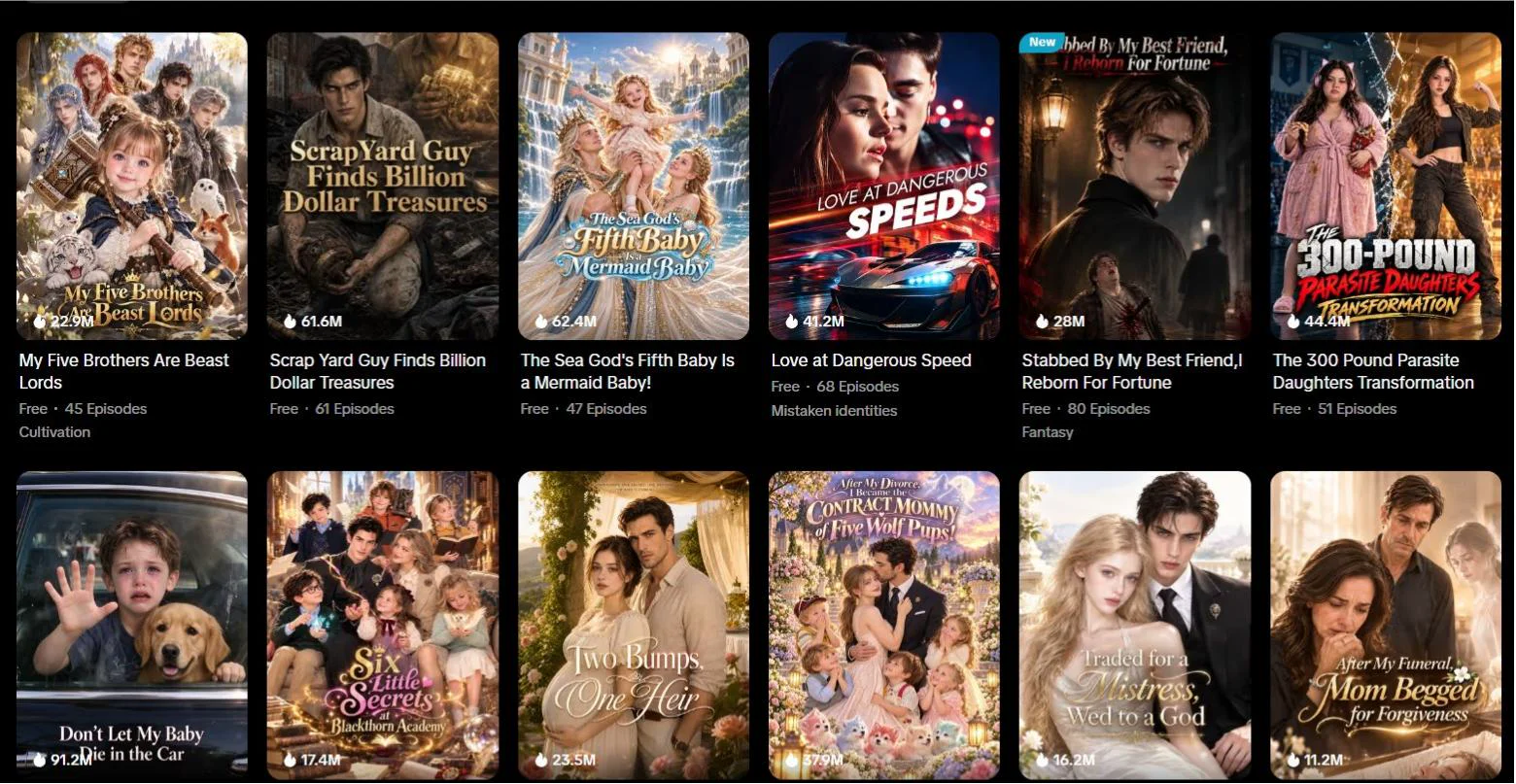
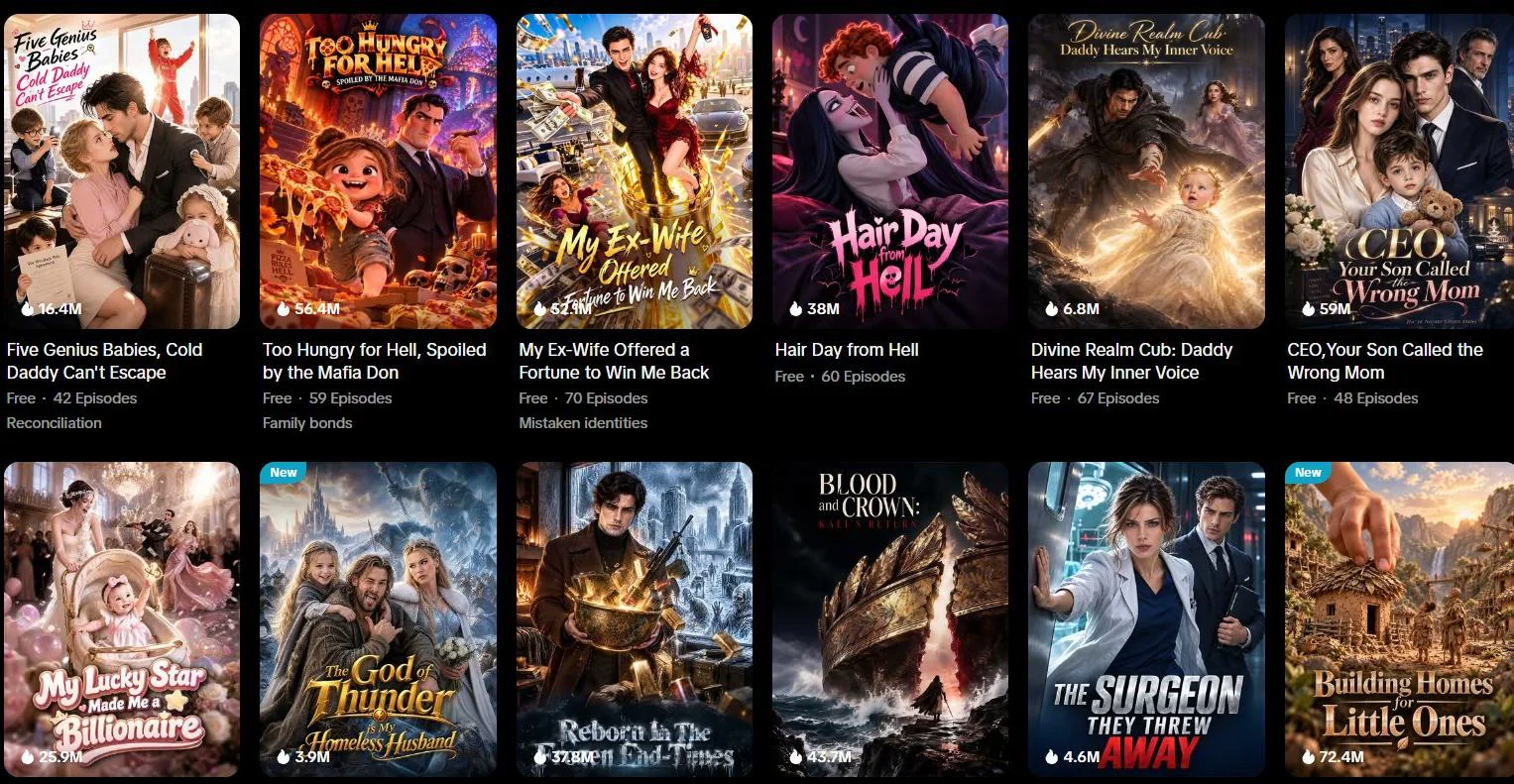
Microdramas are serialized vertical stories with episodes of one to two minutes, built on cliffhangers and paid unlocks. They went from a Chinese app category to a mainstream US habit in a few years. ReelShort and DramaBox lead the paid apps, and ByteDance launched a free app, PineDrama, in early 2026.
AI changed the economics. Indian studio Dashverse told TheWrap that an hour of AI content can cost as little as $20,000, against roughly $150,000 for a live-action vertical series. Chinese producers reportedly make at least 1,000 AI dramas a month for overseas markets, according to Caixin. By Owl & Co.’s count, two-thirds of the top 20 microdramas released outside China in the third quarter were AI-generated.
That speed matters for faces. Cheap, fast production makes shortcuts tempting, and a face lifted from a public post is among the cheapest inputs there is.
Three cases, three different questions about faces
The phrase “AI drama controversy” covers very different problems. These three cases show the range.
| Case | What happened | Whose face? | The real issue |
|---|---|---|---|
| The Peach Blossom Hairpin | A 72-episode AI costume drama on Hongguo; creators said their likeness was used | Real people, without consent | Likeness taken |
| Fruit Love Island | An AI TikTok parody of Love Island with talking fruit; about 300 million views reported in nine days | Nobody’s, but a real winner’s nickname was echoed | Format copied, “AI slop” backlash |
| Tilly Norwood | An AI “actress” from studio Particle 6, announced as the lead of a feature film | Nobody’s, by design | Synthetic performers vs human actors |
The Peach Blossom Hairpin: the face that was taken
In late March 2026, several creators accused the series of copying their features, outfits and makeup. Li, a 26-year-old model and influencer, said she had never acted, yet she found herself playing a cruel character. A second creator known as Baicai said the show drew on New Year photos he had posted publicly on Xiaohongshu. Both put their original photos next to the characters, and the resemblance was strong.
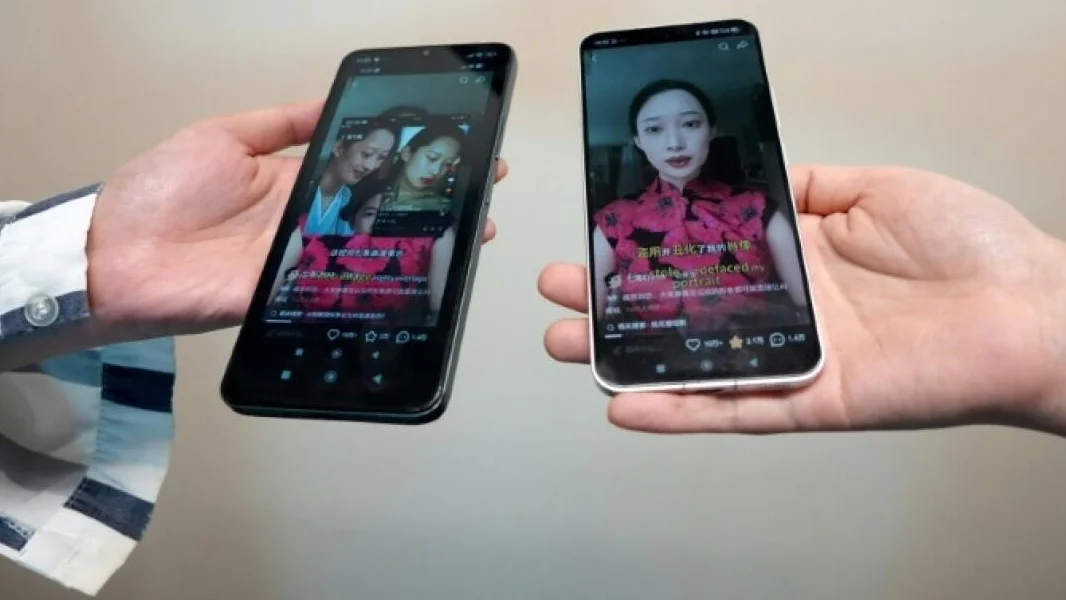
The platform’s response was slower than the outrage. AFP reported that the series kept running for days, with the disputed characters quietly replaced, before it came down. By April 3, Hongguo, the ByteDance-owned app that hosted it, announced a full removal and a 15-day upload suspension for the production company. Hongguo also said it had removed hundreds of videos in the first quarter of 2026 for relying on stolen AI likenesses.
What it teaches: detection came from fans, not from a system, and the show had already collected tens of millions of views.
Fruit Love Island: the format that was copied
The first episode appeared on March 13, 2026 on the account @ai.cinema021. It rebuilt the reality dating show Love Island with human-like fruit characters such as Strawberina and Bananito, and the account passed 3.3 million followers within ten days. Critics called it AI slop, TikTok removed several episodes, and in late March the creator threatened to cancel the whole thing.
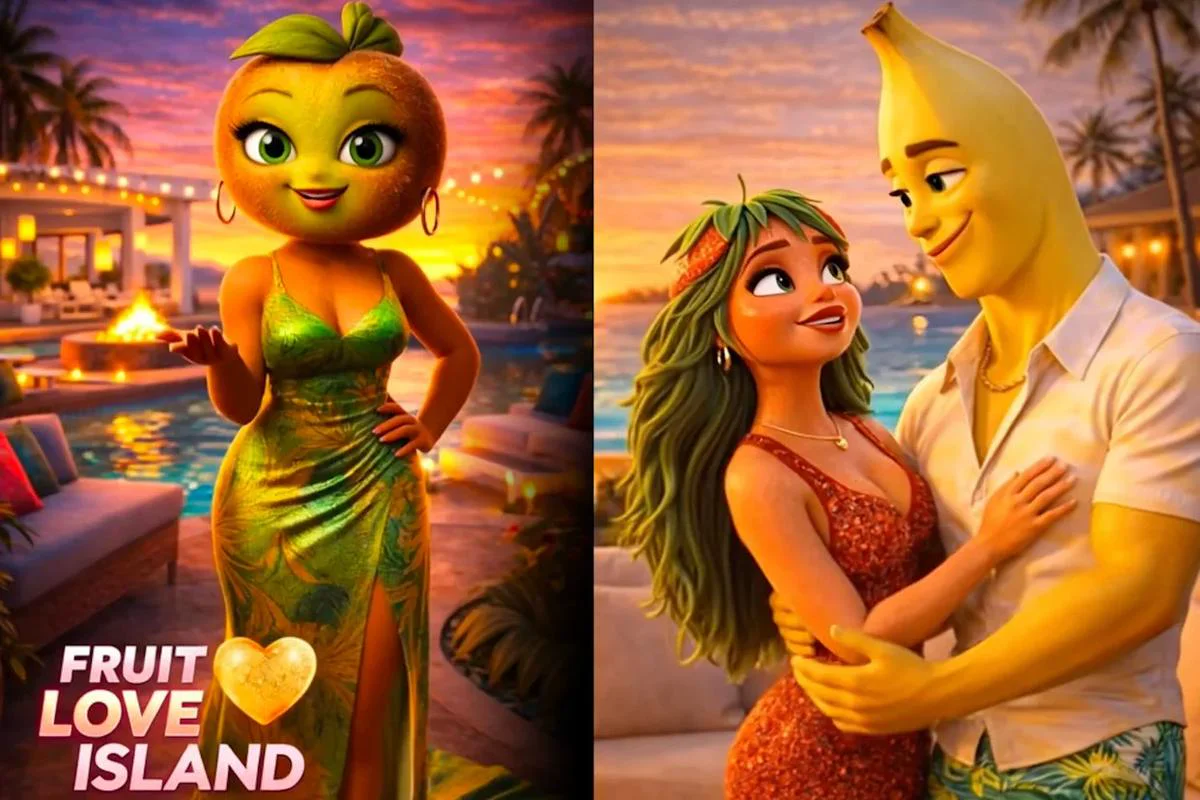
The real-world friction was personal as well as artistic. According to BBC reporting, the Love Island USA season 7 winner Amaya Espinal, nicknamed “Amaya Papaya,” voiced her distaste for the AI recreation, and a spin-off account featured a papaya character that appeared to be modelled on her. ITV, which makes Love Island, had not responded at the time.
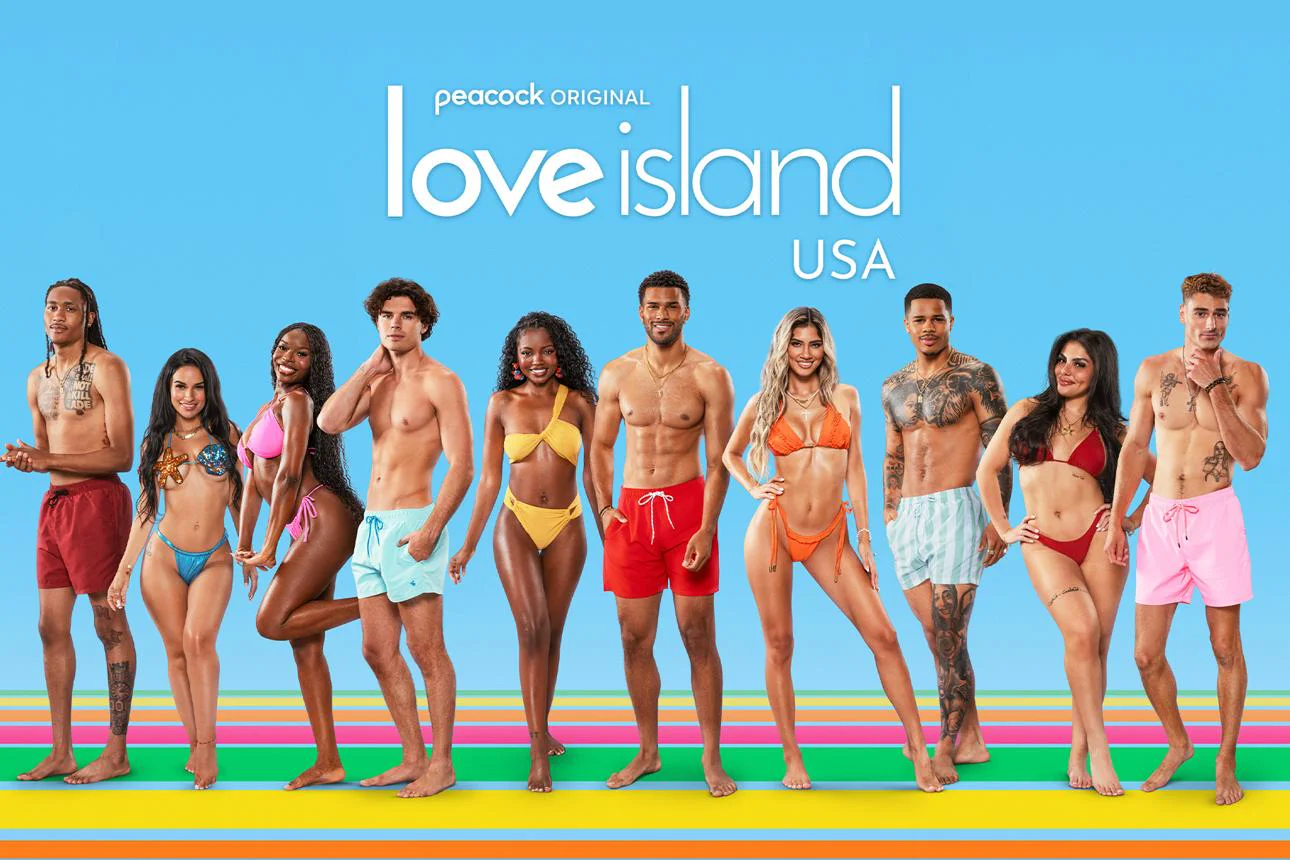
What it teaches: a drama can borrow a real person’s identity, nickname or persona without ever showing a human face.
Tilly Norwood: the face that belongs to no one
Tilly Norwood is an AI-generated character created by the studio Particle 6 and unveiled at a film festival in 2025. Reports that Hollywood agents were interested triggered a backlash, and in May 2026 actors including Emily Blunt and the union SAG-AFTRA spoke out against the idea. In July 2026 the studio announced that Tilly would “star” in a feature called Misaligned. In September she glitched into Chinese mid-sentence during an interview with Piers Morgan.
Institutions have already drawn a line. For the 99th Academy Awards, the Academy said acting nominations require performances that are demonstrably human and given with consent, and that screenplays must be human-authored.
What it teaches: an openly synthetic character is a different category from a lookalike of a real person. The line that audiences and institutions keep returning to is consent and disclosure.
How a real face ends up on screen
Reporting on these cases points to three routes. Knowing which one you are dealing with changes how you prove it.
| Route | What it starts from | What makes it provable |
|---|---|---|
| Reference-photo cloning | A few public photos of you, used as references so one character stays consistent across episodes | A side-by-side with the original photo, plus matching outfit, hair or makeup |
| Face swap on existing footage | Your face laid over another person’s performance | The original footage often exists, so the swap is easy to demonstrate. In March the Beijing Internet Court disclosed a case where an actress’s images were misused this way by two companies. |
| The accidental lookalike | A text prompt that happens to produce your features | Hardest of the three. It depends on whether viewers connect the face to you. |
The third route deserves a caution. A Beijing lawyer quoted by China Daily said that under Chinese practice the key question is whether an AI-generated face leads the public to associate it with a specific person. “It looks like me” is therefore a starting point. “People who know me say it is me” is stronger evidence.
Is that really your face? A five-minute check
- Match specifics, not vibes. Compare features that are hard to fake by accident: eye shape, brows, a mole, hairline, the way one side of your smile lifts.
- Find the source photo. The strongest evidence is a particular photo of yours that matches the character’s pose, outfit or makeup. That is how the Peach Blossom Hairpin creators made their case.
- Line up the timeline. Check whether the drama’s release came after you posted the photo.
- Look for the AI label. TikTok asks creators to label realistic AI content and may add its own label. A missing label proves nothing about your face, but it is worth noting in a report.
- Ask someone who knows you. Show a friend a still without saying who you think it is. If they name you unprompted, write that down.
If it is you: what to do, in order
- Preserve first, report second. Screen-record the episode with the title, account name, episode number and view count visible, and save the URL and the date. The Peach Blossom Hairpin was edited while it was still live, so the evidence can change.
- Keep your originals. Save the source photos as original files, along with the links to where you posted them.
- Report inside the app. TikTok’s guidelines do not allow synthetic media that uses the likeness of an adult private figure without permission. On the post’s menu, choose the reason closest to impersonation or AI-generated content. Dedicated drama apps have their own report and support channels.
- Send a written request. A short, factual message with evidence attached is easier for a reviewer to act on than a report tag alone (template below).
- Decide whether to go public. In the Peach Blossom Hairpin case, public posts and fan pressure came before the platform acted. Going public also invites harassment, so weigh it against how fast you need the removal.
- Get legal advice if it is commercial, defamatory or sexual. A villain role, an ad or an intimate image changes the stakes. If the content is sexual, treat it as urgent and use the platform’s reporting route for intimate imagery.
A removal request you can paste
Fill in the brackets and send it through the platform’s support form or report flow.
Where the law stands today
| Where | Status as of November 24, 2026 |
|---|---|
| US federal | No general federal right over your digital likeness yet. The NO FAKES Act (S. 4591) would create one, with notice-and-takedown, a counter-notice process, and statutory damages of $5,000 to $25,000 per violation. The Senate Judiciary Committee advanced it unanimously in June. On September 30, Sen. Ted Cruz objected to passing it by unanimous consent. Supporters have pointed to the lame-duck session after the midterms; otherwise it would start over in 2027. We found no report that it has passed. |
| US states | Some states already protect likeness or digital replicas; Tennessee’s ELVIS Act is one example. Rules vary widely, so check your state. |
| Platforms | TikTok bans synthetic media using an adult private figure’s likeness without permission and requires labels on realistic AI content. |
This is general information, not legal advice. If a real harm is involved, a lawyer who handles right-of-publicity or privacy cases can tell you what applies where you live.
Lowering your risk without disappearing
No setting makes a public photo impossible to scrape. You can still make it harder and easier to catch.
- Restrict the best references. Clear, front-facing, high-resolution close-ups make the easiest inputs, so those are the posts worth putting behind a private or friends-only setting.
- Keep dated originals. Original files and post links are your proof of who the face belonged to first.
- Search yourself now and then. Try your name, your handle and “AI drama,” and run reverse image searches on your most public photos.
- If you are a creator, make yourself easy to reach. Fans spotted Li’s face before any detection system did, so give them a clear way to tell you.
The same technology, on your own terms
The tools behind the Peach Blossom Hairpin problem can also make something fun, once the face is yours and the scene is your choice. Three habits keep it on the right side of the line. Use your own photo, or the photo of someone who said yes. Leave celebrity and stranger faces alone. Label realistic AI clips when you post them, as TikTok asks.
A micro-drama is mostly structure: a hook, a twist and a cliffhanger. You can build a three-beat version from a single selfie in Movcl.
| Beat | What to make | Where in Movcl |
|---|---|---|
| 1. The hook | Your face on a cinematic poster, such as a coastal chase or a crime-duo one-sheet | Face Swap templates like Pastel Marina Chase Poster or Neon Coastal Crime Duo Poster |
| 2. The twist | The same photo in a gown or tuxedo for the big reveal | Outfit Change, for example Silver Lame One-Shoulder Gown or Classic Black Tuxedo |
| 3. The cliffhanger | A short moving clip from a still photo | AI Video, such as the Cry Me a River template |
Most image generations take one to three minutes and videos about a minute. Results made with free gems carry a small Movcl watermark, and the gem cost is shown in the app before you confirm. For more on keeping your own face recognizable, read why templates beat open prompts for your own photos, or see the AI video career roles for more ideas.
Frequently asked questions
- How do I find out if my face is in an AI drama?
- There is no reliable automatic scan. People usually find out because friends or followers recognize them. Search your name, your handle and the phrase “AI drama,” run reverse image searches on your most public photos, and ask followers to tell you if they spot a lookalike.
- Is a lookalike the same as stealing my face?
- Not necessarily. A face that resembles you by accident is harder to challenge than one built from your photos.
- Is it okay to put my own face in an AI drama?
- Yes, when the photo is yours or the person pictured has agreed. Label realistic AI content when you post it to TikTok, and leave celebrity and stranger faces out of it.
Want to be the star on purpose?
Put your own photo into poster scenes, gowns and short AI videos, right from your phone.
Try MovclSources
- The Star Malaysia, “When imitation is not the best flattery”; Jiemian, on Hongguo’s live-action push
- TechNode and AIBase, on Hongguo’s response and the April 3 removal notice
- AFP and the BBC (via K24 Digital), Gizmodo and Her Campus on Fruit Love Island
- ABC News, Variety, NME and Gizmodo on Tilly Norwood and Misaligned; TechCrunch and NPR on the Academy’s 2027 Oscars rules
- Reuters (via Nation Africa and Interaksyon), MediaPost (Owl & Co.), TheWrap, Caixin and VML on the AI microdrama boom
- S&P Global, CMS, Daily Journal, Politico-based coverage and the AI Musicpreneur on the NO FAKES Act
- TikTok Support and Community Guidelines on AI-generated content and private-figure likeness; Movcl Features page