Nano Banana 3 Pro: Everything We Know So Far About Google's Next Image Model
A new model ID called Gempix 3 Pro just showed up inside Google's image-protection system. Here's what's confirmed, what's only reported, what's still a blank, and what it could mean if most of the images you make are photos of people.
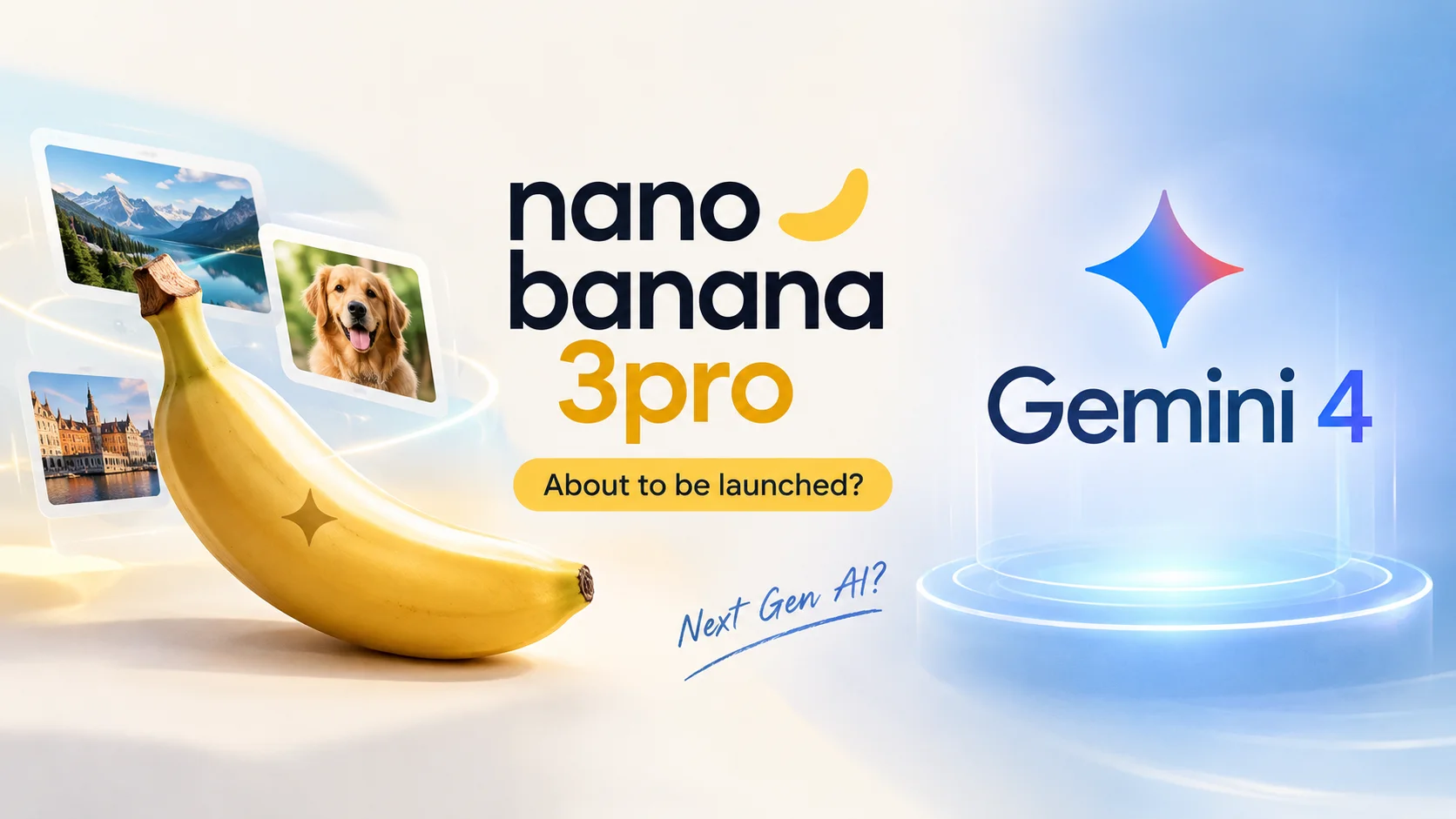
On October 12, TestingCatalog, the outlet that tracks unreleased Google features by digging through code and interface strings, reported that a new image model identifier had appeared in Google's image citation system. The name was Gempix 3 Pro. TestingCatalog's read is that this is the next Pro-tier Nano Banana, that it's built on Gemini 4, and that it could arrive in November or December.
Google hasn't said a word about it. That matters, because the gap between "a string appeared in a system" and "a product launched" can be weeks or it can be never. So before going any further, here's the honest scorecard.
- Gemini 4 Argon launched on September 30, 2026, in a limited release.
- Nano Banana 2.1 became generally available on October 6, 2026.
- The Gemini API already documents an
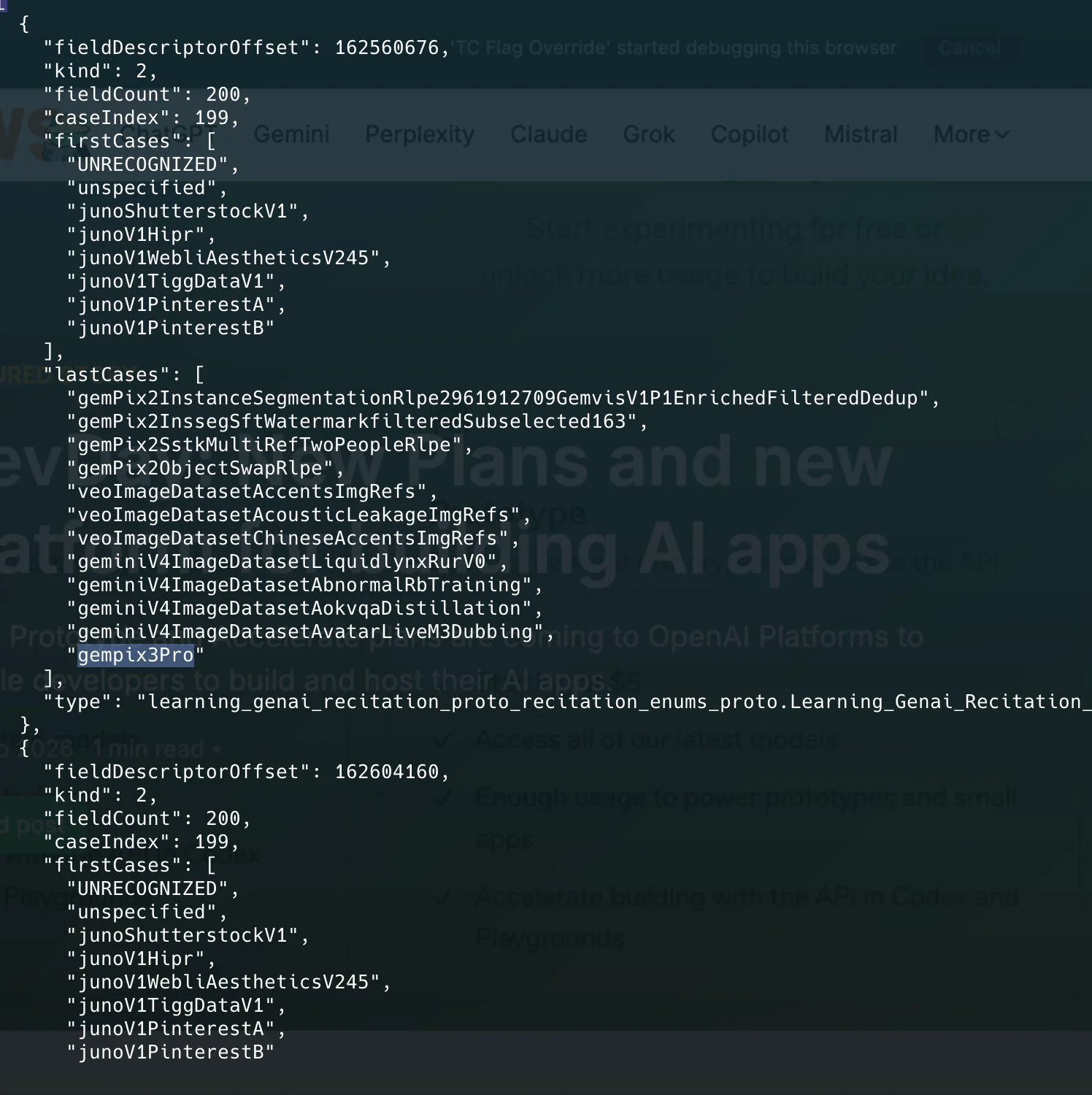
IMAGE_RECITATIONstop reason, the mechanism that blocks images too close to existing ones.
- "Gempix 3 Pro" was added to Google's image citation system.
- It's built on Gemini 4 (the article names Argon specifically).
- "Gempix" is an internal reference, so the public name would likely be Nano Banana 3 Pro.
- The expected window is November to December 2026.
- The official name, release date, model ID, and pricing.
- Maximum resolution and how many reference images it accepts.
- Whether free Gemini users get it, and whether it ships alongside Argon's wider rollout.
Decoding "Gempix": how Google names its image models
Every Google image model carries two names. There's the technical one (Gemini 2.5 Flash Image, Gemini 3 Pro Image) and the consumer nickname everyone actually uses, Nano Banana. Behind both, Google uses internal references, and "Gempix" is one of them.
The reason people are confident Gempix 3 Pro means a new Nano Banana Pro is the previous step in the pattern. Before Nano Banana Pro launched in November 2025, the community traced the identifier GEMPIX2 to it. Nano Banana Pro is technically Gemini 3 Pro Image, so Gempix 2 lined up with the Gemini 3 generation's Pro image model. Gempix 3 Pro following the same naming logic points at the Gemini 4 generation's Pro image model.
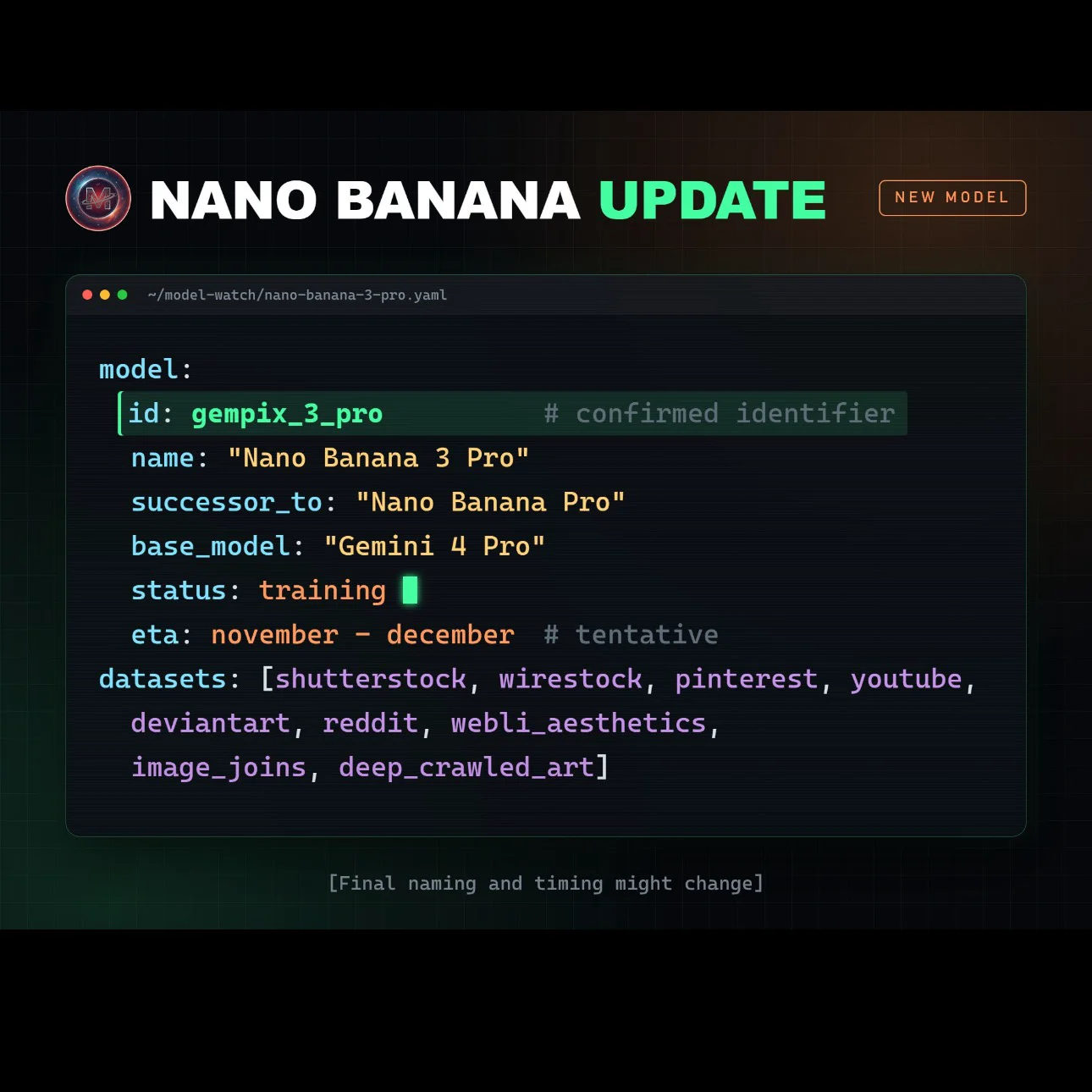
One wrinkle worth knowing. TestingCatalog's article says Google previously used "Gempix 2" for "Nano Banana 2 Pro." Google has never shipped a product with that name. The most consistent reading is that Gempix 2 referred to Nano Banana Pro. It doesn't change the conclusion, but it's a reminder that "Nano Banana 3 Pro" is an inferred name. Google could call it Nano Banana 3, or fold it into its newer Gemini Omni lineup instead.
The Pro line and the Flash line take turns
Lay the releases out in order and a rhythm appears. Pro image models follow Google's flagship language models. Flash image models follow the fast, cheap ones. The two lines have been alternating:
- August 2025Nano Banana (Gemini 2.5 Flash Image). Went viral on LMArena as an anonymous model before launch, then pushed the Gemini app to the top of the App Store and Play Store.
- November 20, 2025Nano Banana Pro (Gemini 3 Pro Image). Launched the same day as Gemini 3 Pro. Brought readable text rendering, infographics, and camera and lighting control.
- February 26, 2026Nano Banana 2 (Gemini 3.1 Flash Image). Pro-level quality at Flash speed. Became the default image model in Google Search's Lens and AI Mode across 141 countries.
- October 6, 2026Nano Banana 2.1 (Gemini 3.6 Flash). Better editing, masks, subject consistency, and adjustable thinking levels.
- Expected November to December 2026Nano Banana 3 Pro (Gemini 4, reportedly Argon). Reported only.
Seen this way, the timing makes sense. Argon is the first Gemini 4 model and Google positions it as a frontier flagship, so the first image model built on top of it would naturally be a Pro-tier one, not a Flash. And the previous Pro image model shipped in step with its flagship, on November 20 of last year. Doing the same thing in roughly the same window this year would be very on-brand.
Here's how the family compares on paper so far:
| Model | Built on | Max resolution | Reference images | API price per 1K image |
|---|---|---|---|---|
| Nano Banana | Gemini 2.5 Flash | About 1K | Not specified | Not listed |
| Nano Banana Pro | Gemini 3 Pro | 4K | Up to 14, with up to 5 people kept consistent | $0.134 |
| Nano Banana 2 | Gemini 3.1 Flash | 4K | Up to 14 | $0.067 |
| Nano Banana 2.1 | Gemini 3.6 Flash | 4K, aspect ratios up to 8:1 | Up to 14 (4 characters plus 10 objects) | $0.0336 |
| Nano Banana 3 Pro | Gemini 4 (reported) | Unknown | Unknown | Unknown |
Prices are Google's published Gemini API rates for a 1K-resolution output. Higher resolutions cost more.
The detail that matters most: where it was spotted
Most leaks come from a model picker or a settings menu. This one came from somewhere more interesting. Gempix 3 Pro turned up in Google's image citation system, a safeguard that checks whether a generated image is too similar to existing reference images, including content traced to sources like Shutterstock and Pinterest, and blocks the output when it is.
If you use the Gemini API, you've seen the visible end of this. When a generation gets stopped for being too close to an existing image, the API reports IMAGE_RECITATION as the reason. Think of it as a plagiarism check for pictures.
Why does it matter that the new model was found here? Because copyright plumbing isn't what you wire up for a model you're casually experimenting with. Connecting a model to content-protection systems is the kind of work that usually happens when a team is preparing it for real users. TestingCatalog reads it the same way: Google is getting the model ready for the matching and protection layer it will need at launch.
Two caveats keep this honest. First, the existence of IMAGE_RECITATION in the docs doesn't prove Gempix 3 Pro is already running through it; it only proves the mechanism exists. Second, "getting ready" can still mean months. It's a meaningful signal, not a countdown clock.
A practical side note. This system is also why some requests quietly fail. If you ask any Google image model to recreate a well-known photo, a stock image, or a famous poster as closely as possible, there's a real chance the output gets blocked. A newer model won't change that. If anything, expect the guardrails to come along with it.
The foundation: what Gemini 4 Argon actually is
Gemini 4 Argon arrived on September 30 with Google DeepMind calling it the "next era of frontier intelligence," aimed at deep reasoning across long, complicated workflows. It's also the first Gemini model named with a codename instead of the familiar Pro, Flash, or Flash-Lite tiers. Google hasn't explained how the rest of the Gemini 4 family will be named.
The road to it was bumpy. Gemini 3.5 Pro, promised at Google I/O for June, was reportedly shelved (according to SemiAnalysis) so resources could shift to Gemini 4. Google filled the gap with a quick run of Flash updates: 3.6, 3.7, and 3.8.
Access is narrow for now. Argon launched only for trusted cybersecurity defenders in Google's Fairwind program, plus internal teams and testers. Google says AI Ultra subscribers and paid API users come next, "as soon as possible," without a date. As of October 11, Argon still wasn't listed on the Gemini API's model or pricing pages.
How strong is it?
On most of the benchmarks Google chose to publish, Argon leads. On a couple, it doesn't. Both sides belong in the picture:
| Benchmark | What it tests | Gemini 4 Argon | Best competitor listed |
|---|---|---|---|
| DeepSWE v1.1 | Real-world software engineering | 77.9% | Claude Opus 5.5, 74.2% |
| Vals Index | Broad professional tasks | 68.9% (1st of 41) | Claude Opus 5.5, 67.0% |
| GraphWalks (256K to 1M) | Reasoning over very long context | 84.2% | GPT-6 Astra, 71.8% |
| LVBench | Understanding long videos | 91.7% (state of the art) | Not listed |
| Terminal-Bench 4.0 | Command-line agent tasks | 57.4% | Claude Opus 5.5, 66.4% |
| FrontierSWE v2 | Harder software engineering | 55.0% | GPT-6 Astra, 65.5% |
Mostly Google-reported figures from the September 30 launch, plus Vals AI's index. Independent rankings vary: Artificial Analysis's intelligence index puts Argon at 52.6, behind Claude Opus 5.5 (57.6) and level with GPT-6 Astra (52.7).
One more spec stands out: Argon can produce up to 1 million output tokens in a single response, up from 64K in earlier Gemini models.
The part nobody should skip
Argon's announcement didn't mention image generation at all. Every headline number above is about coding, reasoning, and long context. The only visual result is LVBench, which measures understanding long videos, not creating images.
So why would a strong reasoning model matter for pictures? Because that's precisely what made the last Pro model different. Nano Banana Pro's jump over the original wasn't mainly about prettier pixels. It was about understanding: reading a complicated instruction correctly, knowing what a real thing should look like, laying out an infographic that makes sense, spelling words right inside an image. That intelligence came from the Gemini 3 Pro model underneath it. A substantially stronger base model is a reasonable reason to expect another step up in how well the image model understands what you're asking for.
Reasonable, not proven. Image quality depends on a lot more than the language model it's attached to, and we haven't seen a single output yet.
What could actually get better
This section is informed speculation. For each area, here's what the current models already do, what a Gemini 4 base might plausibly improve, and how confident I am, based on how the previous Pro upgrade played out.
| Area | Where things stand today | What might improve | My confidence |
|---|---|---|---|
| Following complex instructions | Nano Banana Pro reasons before drawing; 2.1 adds adjustable thinking levels | Fewer misread requests, better multi-step edits in a single prompt | Higher. This is where a reasoning upgrade shows first. |
| Text and infographics | Pro renders long, multilingual text; 2.1 scored 0.521 vs 0.179 on Google's infographic factuality test | More accurate charts, labels, and translated text inside images | Medium to high |
| Keeping people consistent | Pro keeps up to 5 people consistent; 2.1 handles 4 characters plus 10 objects | More reliable likeness across edits, possibly more people per scene | Medium |
| Fine edit control | Pro adjusts lighting, camera angle, focus, color grading, and day-to-night; 2.1 adds mask-based edits | More precise local edits with less spillover into the rest of the image | Medium |
| Resolution | 4K across Pro, 2, and 2.1 | Possibly higher, but there's no signal either way | Low |
| Price and speed | Pro costs about 4x more than 2.1 per 1K image and runs slower | Expect a Pro-tier model to cost more and run slower than 2.1, not less | Higher |
Current capabilities come from Google's official announcements for Nano Banana Pro (November 2025) and Nano Banana 2.1 (October 2026).
If most of what you make involves real faces, the row to watch is consistency. Swapping an outfit, changing a background, or turning a selfie into a styled portrait only works if the person still looks like themselves afterward. Every Nano Banana release so far has pushed on that problem. It's the area where better "understanding" translates most directly into results people notice.
Why Google needs this one
Here's an awkward fact: Google's strongest image model today isn't a Pro model at all. It's Nano Banana 2.1, the Flash-tier release from a week ago. In Google's own preference testing, 2.1 scored 1050, ahead of Nano Banana 2 (990) and Nano Banana Pro (935). The Pro line hasn't had a new model since November 2025, close to a year, and the cheaper line has passed it.
Meanwhile the top of the public leaderboards belongs to someone else:
| Leaderboard | No. 1 | Google's best |
|---|---|---|
| Arena, text-to-image (week of Oct 5 to 11) | OpenAI GPT Image 2.5, 1425 | Nano Banana 2.1, 6th, 1328 |
| BudgetPixel (Oct 12) | OpenAI GPT Image 2.5, 1613 | Nano Banana 2.1, 4th, 1562 |
| Artificial Analysis, text-to-image | OpenAI GPT Image 2.5, 1198 | Nano Banana 2.1, 4th to 5th, about 1160 |
Each leaderboard uses its own scoring scale. Compare ranks within a row, not numbers across rows or against Google's internal test scores.
A gap of roughly 100 points on Arena is significant. And the field behind the leader is crowded too: Black Forest Labs' FLUX 3 Image, Ideogram 4.5, and Recraft V4.1 Flash all shipped within the last few weeks, alongside strong releases from Chinese labs.
The stakes are also unusually high for Google, because image models have been its biggest consumer moments. The original Nano Banana pushed Gemini to the top of both app stores and brought in over 10 million new users in a single week. Nano Banana Pro generated 1 billion images in its first 53 days, according to Google, which works out to roughly 19 million a day. A flagship image model that retakes the lead would be one of the most visible things Google could ship this year.
When it might launch, and who gets it first
TestingCatalog's November to December window is an estimate based on Google's past rhythm, not a leaked date. The article itself says there's no confirmed public release plan. That said, the logic holds up: last year's Pro image model launched alongside its flagship, and a similar pairing this year lands in the same months.
The bigger question is who gets access first. Based on how Nano Banana Pro and Argon have rolled out, here's the most likely order. This is my read, not a leak:
- Internal teams and trusted testers. Likely already happening, given where the model ID showed up.
- Google AI Ultra subscribers and paid API users. This is where Argon is headed next, and TestingCatalog suggests the image upgrade could ship alongside it.
- Other paid Gemini plans. Nano Banana 2.1 is currently limited to paid plans in the Gemini app.
- Free users, with a small daily cap. When Nano Banana Pro launched, free users got 3 Pro images a day before falling back to the standard model at 100 a day.
One thing could slow this down: Argon itself hasn't reached Ultra subscribers yet. Several outlets have said it's coming "next week" or "soon," but as of October 11 it was still limited to the Fairwind program. An image model built on Argon may well wait for it.
Expect the same labeling rules as before, too. Every image from Google's models carries an invisible SynthID watermark, and free and Pro-plan images in the Gemini app also carry a visible Gemini sparkle mark. Ultra subscribers and AI Studio users don't get the visible mark. If you're curious how invisible watermarks and other AI tells work, we covered that in 5 ways to tell if a photo was made with AI.
How to follow the news without getting fooled
Every time a Nano Banana rumor spreads, a crop of lookalike websites appears with "nano banana 3" in the domain name. Some offer "early access" for a fee. At least one claims Nano Banana 3 already launched at Google I/O 2026, which it didn't. None of these sites are affiliated with Google.
A few simple rules cover almost every case:
- Real launches come from Google's own channels. That means the Google blog, the Gemini app, Google AI Studio, and Google's developer documentation. If you didn't see it there, it hasn't launched.
- No one can sell you access to an unreleased Google model. A site charging for "Nano Banana 3 Pro" today is selling something else under a borrowed name.
- Be careful where you upload your face. Lookalike sites rarely have clear policies on what happens to your photos. Our guide to AI photo apps and your privacy walks through what to check before uploading anything.
If you mostly edit photos of people, here's the practical take
General-purpose image models get noticeably better with every release, and Nano Banana 3 Pro will probably raise the bar again on what a text prompt can do. That's good news for everyone, including people who never open the Gemini app, because better models push the whole field forward.
But it helps to be clear about what a general model is and isn't built for. Gemini, ChatGPT, and the others are designed to do everything: infographics, product shots, slide graphics, posters. Portrait editing is one job among hundreds. In practice that means a few recurring frictions:
- You have to describe everything. The look, the lighting, the outfit, the framing, and then the fixes when the first attempt drifts.
- Likeness can slip. Even the best current models occasionally return someone who looks almost like you, which is the one result you can't use.
- The best tier is usually gated. Pro models typically come with daily caps or watermarks on free plans.
- Data policies differ by product. It's worth knowing what each service does with the photos you upload. We dug into that in Does this app train on your photos?
Movcl takes the opposite approach. Instead of a blank prompt box, it's built around one task: turning a single photo of you into something new. You upload a photo, pick a template, and get a face swap, an outfit change, an AI art redraw, or a short video, without writing prompts or chasing consistency through retries. Your photos aren't used to train models, and you can start with a free trial.
The sensible plan for the next couple of months: keep an eye on Google's official channels for Nano Banana 3 Pro, and when it lands, try it for the general creative work it's good at. For the photos of yourself you'd actually want to post, there's nothing to wait for.
Try it with your own photo
Face swaps, outfit changes, AI redraws, and short videos from a single upload. Your photos are never used to train models.
Start your free trialWant the full background on the current models? Our complete guide to Gemini Nano Banana covers how each version works and how to use it today.
Frequently asked questions
Has Nano Banana 3 Pro been released?
No. As of October 14, 2026, it exists only as a reported model ID, Gempix 3 Pro, spotted by TestingCatalog. Google hasn't confirmed it.
When will Nano Banana 3 Pro come out?
TestingCatalog expects a November to December 2026 window, based on Google's past release rhythm. Nano Banana Pro launched on November 20, 2025, alongside Gemini 3 Pro. There's no official date.
What is Gempix?
An internal Google reference for its image models. The community traced GEMPIX2 to Nano Banana Pro, which is why Gempix 3 Pro is read as the next Pro-tier Nano Banana. The final product name could still be different.
What model is it built on?
According to the leak, Gemini 4. TestingCatalog's article names Gemini 4 Argon, the flagship Google released in limited form on September 30. Google is also reportedly testing other Gemini 4 checkpoints internally, so the exact base isn't certain.
Will it be free?
Unknown. If Google follows the Nano Banana Pro pattern, free users would get a small daily quota while paid subscribers get more. If it follows Argon's rollout, AI Ultra subscribers and paid API users would come first.
What's the best Google image model right now?
Nano Banana 2.1, released October 6, 2026. It beats Nano Banana Pro in Google's own preference testing and is Google's highest-ranked model on public leaderboards.
Will it beat OpenAI's GPT Image 2.5?
Nobody knows yet. GPT Image 2.5 currently leads the major leaderboards by a wide margin over Google's best. Closing that gap is likely the main reason this model exists, but there are no outputs or benchmark results to judge by.
Can I get early access?
Not through any legitimate public route. Google typically starts with internal teams and trusted testers. Sites selling "Nano Banana 3 Pro access" today aren't affiliated with Google.
Sources and how this piece was put together. This article draws on TestingCatalog's October 12, 2026 report, Google's official announcements for Nano Banana Pro, Nano Banana 2.1, and Gemini 4 Argon, the Gemini API documentation, and public leaderboards (Arena, Artificial Analysis, BudgetPixel) as of October 12, 2026. Benchmark figures are largely Google-reported. We'll update this page when Google confirms anything.