


Y2K vs Quiet Luxury: Which Aesthetic Actually Suits You?
Two of the most visible personal-style languages of the mid-2020s, compared — and a low-stakes way to try both on your own photo.
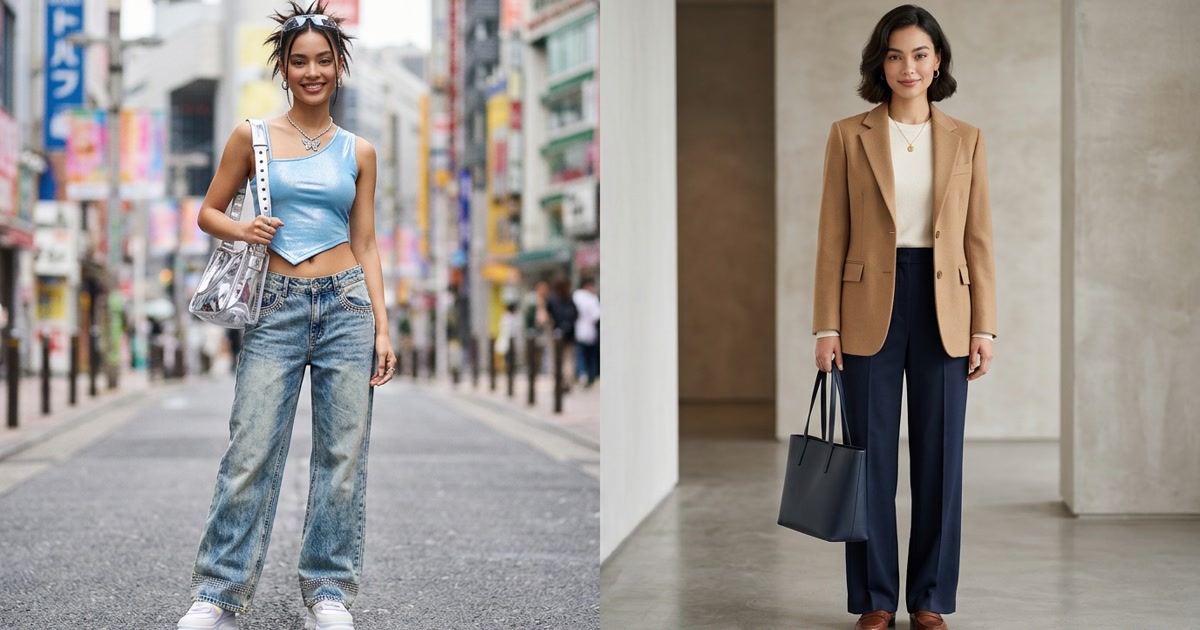
Same person, two completely different signals. The difference is rarely subtle.
Key takeaways
- Y2K is expressive and often nostalgic: low-rise proportions, visible branding or metallic details, brighter or higher-contrast palettes, and a willingness to be noticed.
- Quiet Luxury (closely related to “old money” styling) prioritizes restraint — excellent fabrics, clean silhouettes, minimal logos, and the suggestion of quality without announcement.
- The two aesthetics currently coexist. Quiet Luxury remains a strong everyday and professional baseline for many people, while Y2K references continue to appear in more playful or editorial contexts.
- You do not have to commit to either full-time. Many successful personal styles borrow one or two codes from each.
- The fastest way to see which direction suits your face, proportions, and existing wardrobe is to generate both versions from the same photo before buying anything.
- Movcl’s Outfit Change feature is built for exactly this kind of low-stakes visual test.
For several years the conversation around personal style has circled two poles that feel almost opposite. One is loud, referential, and often playful. The other is quiet on purpose. Both remain highly visible in 2026, which means the useful question is rarely “which one is winning?” It is “which one actually works on me?”
What Y2K usually means in practice
Y2K, in its current revival form, draws from late-1990s and early-2000s visual codes. Common signals include:
- Lower-rise proportions and more exposed midriff or waistband.
- Visible branding, metallics, rhinestones, or graphic details.
- Higher-contrast or brighter color stories — pinks, metallics, stark black-and-white, or saturated accents.
- A more performative, camera-ready energy. The look is often designed to be noticed.
It can feel nostalgic, ironic, or simply fun depending on how it is executed. The risk is costume. When every element is dialed to maximum, the result can read as period reenactment rather than a contemporary personal style.
What Quiet Luxury usually means in practice
Quiet Luxury (and the closely related “old money” aesthetic) is built on the opposite instinct: do not announce. Typical codes include:
- Clean, often slightly oversized or classically tailored silhouettes.
- Neutral or muted palettes — camel, ivory, navy, soft grey, deep forest, black.
- Emphasis on fabric quality and construction over logos or surface decoration.
- An overall impression of ease and understatement. The clothes look expensive because they look considered, not because they shout.
The risk here is blandness. When restraint becomes the only rule, the result can feel anonymous or overly safe. The strongest versions of Quiet Luxury still have a point of view; they just express it through proportion, texture, and fit rather than through graphics or color noise.
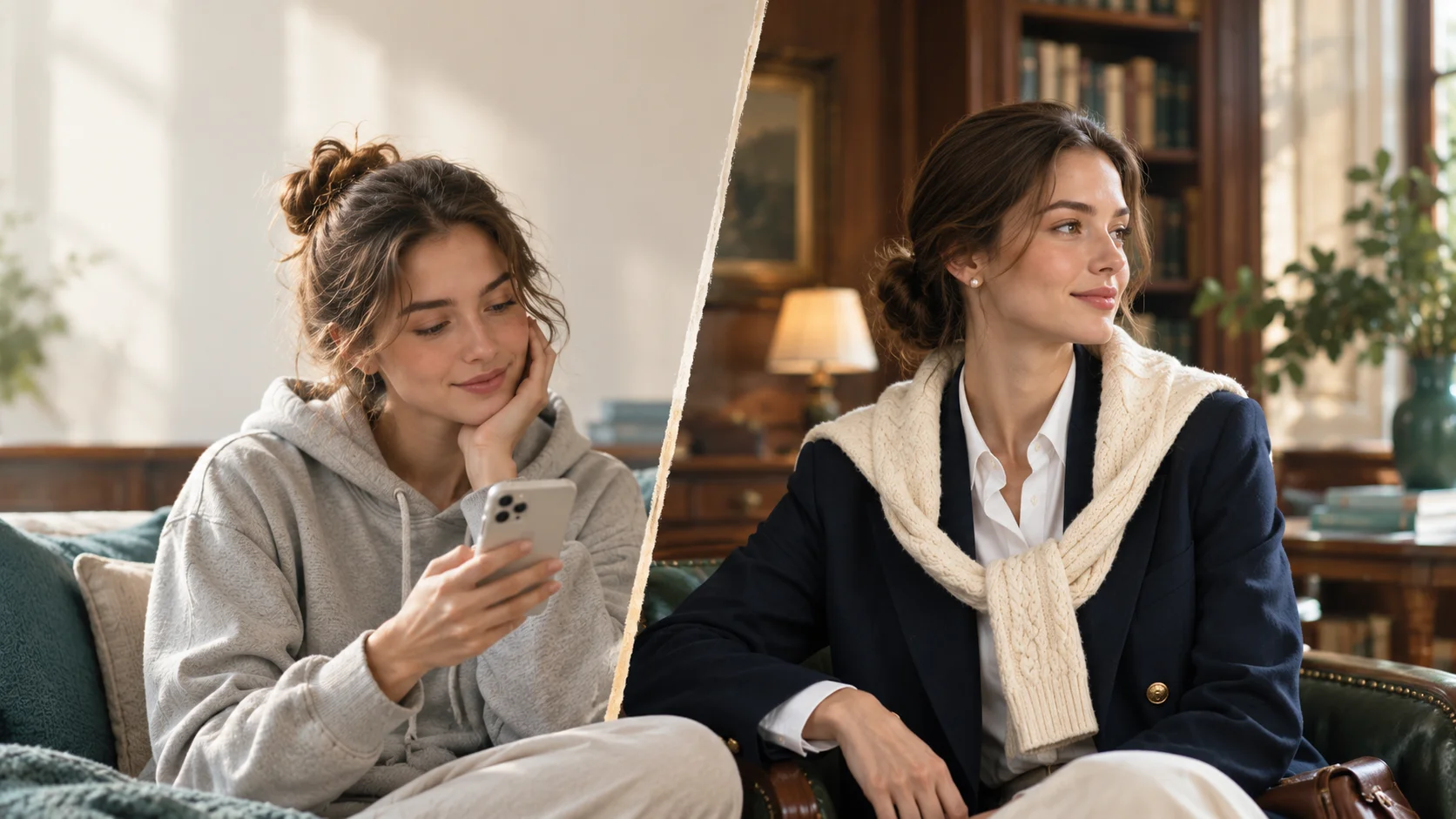
For a more personal exploration of this direction, see the earlier Movcl gallery piece: What Would I Look Like in Old Money Style?
Side-by-side comparison
| Dimension | Y2K | Quiet Luxury |
|---|---|---|
| Core signal | Expressive, nostalgic, willing to be seen | Restrained, quality-first, understated |
| Silhouette | Often lower-rise, tighter or more body-conscious in places | Clean, frequently relaxed or classically tailored |
| Color & surface | Higher contrast, metallics, logos, graphic detail | Neutrals, soft tones, minimal surface decoration |
| Attitude | Playful, referential, sometimes ironic | Assured, calm, “I don’t need to prove it” |
| Common failure mode | Costume / over-nostalgia | Blandness / invisibility |
| Best tested by | Seeing how the proportions and energy sit on your actual face and body | Seeing whether the restraint still feels like you |
Why the choice is personal, not chronological
Trend cycles make it tempting to treat these as sequential — Y2K had its moment, Quiet Luxury followed, something louder is next. In real wardrobes the picture is messier. Plenty of people still reach for restrained tailoring for work or daily life while keeping one or two Y2K-tinged pieces for weekends or creative contexts. Others live comfortably inside one language and rarely borrow from the other.
The more useful filter is not “what is trending this season” but “which set of signals feels accurate when I see it on myself.” That is difficult to answer from moodboards alone. It is much easier once you have seen both versions generated from the same photo of your actual face and body.
The clothes that look best on a model in a campaign are not always the clothes that look like you. A five-minute AI test often reveals the gap faster than another hour of scrolling.
How to test both without buying anything
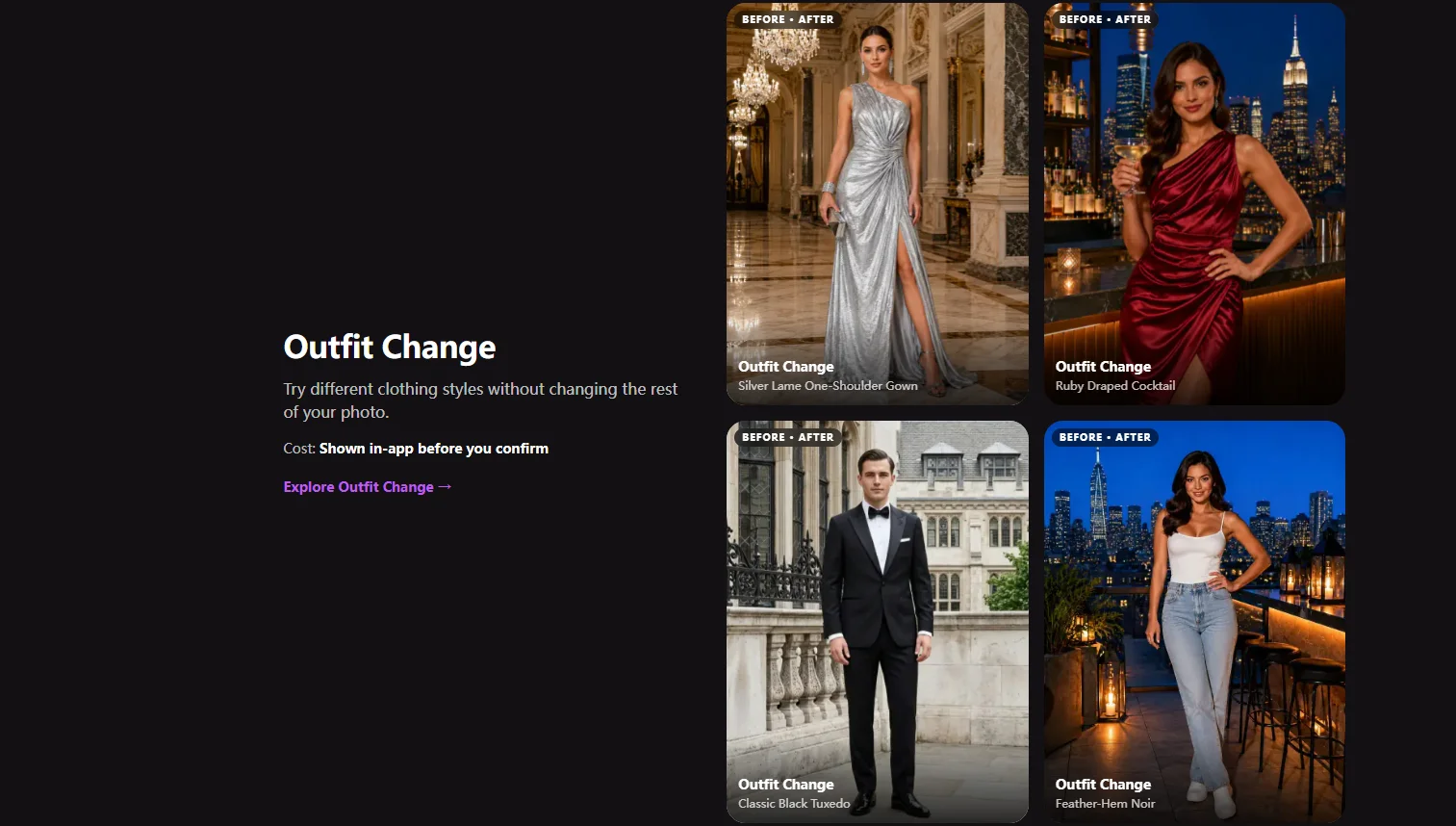
Specialized outfit-change tools exist precisely for this kind of low-stakes experiment. The process is straightforward:
- Choose a clear, well-lit photo where your face and upper body are easy to read.
- Generate a Y2K-leaning version — lower proportions, more surface interest, higher visual energy.
- Generate a Quiet Luxury version — clean silhouette, restrained palette, emphasis on fabric and fit.
- Compare the two side by side. Notice which one feels more like an elevated version of you and which one feels like costume or like someone else’s personality.
Movcl’s Outfit Change feature is built for exactly this workflow: upload one photo, choose styles, and review the results in minutes. It will not replace trying clothes on in real life, but it removes a large amount of expensive or time-consuming guesswork.
A practical middle path
You do not have to declare allegiance. Many coherent personal styles sit between the two poles:
- Quiet Luxury base (excellent trousers, good outerwear, neutral knits) plus one deliberate Y2K reference (a specific bag, a pair of shoes, a small metallic detail).
- Y2K energy in the proportions or attitude, but executed with better fabrics and fewer logos than the original early-2000s versions.
- Context switching — restrained for most days, more expressive when the situation calls for it.
The only real requirement is that the combination still looks intentional when you see it on yourself.
A quick glossary
- Y2K (current revival)
- A contemporary reading of late-1990s / early-2000s fashion codes: lower rises, visible branding or metallics, higher visual energy, and often a nostalgic or playful attitude.
- Quiet Luxury
- An aesthetic centered on restraint, fabric quality, clean silhouettes, and minimal logos. Closely related to “old money” styling in popular discussion.
- Old money style
- A popular shorthand for understated, heritage-leaning dressing that signals status through quality and ease rather than through logos or trends.
- Outfit-change tool
- An AI feature that replaces or restyles clothing on a person in an existing photo while attempting to preserve face and identity.
Frequently asked questions
What is the core difference between Y2K and Quiet Luxury?
Y2K is expressive, logo-aware, and often playful or nostalgic — low-rise proportions, visible branding, metallic or bright accents, and a willingness to be noticed. Quiet Luxury prioritizes restraint: excellent fabrics, clean silhouettes, minimal or no logos, and the suggestion of quality without announcement.
Can the two aesthetics be mixed?
Yes. Many people borrow one or two Y2K references (a low-rise jean, a small metallic detail) inside an otherwise restrained wardrobe, or keep Quiet Luxury tailoring while adding a single nostalgic accessory. Full commitment to either look is optional.
How can I test these styles on myself without buying clothes?
Upload a clear photo to a specialized outfit-change or style tool and generate versions in each aesthetic. This gives a fast visual read on proportion, color, and overall impression before you spend money or rearrange your closet.
Is Quiet Luxury still relevant in 2026?
It remains a strong baseline for many people, especially in professional and everyday contexts, even as louder and more maximalist directions regain runway and editorial attention. The two aesthetics currently coexist rather than one fully replacing the other.